The subtopic in the middle and 13 tasks round it: label five diagrams, complete three tables, put a process in order and fill 73 gaps. Every standard level statement has a box; the three boxes for higher level only are dashed and badged HL, and drop off for an SL class. Type into the blanks and check them, or print it on A4, Letter or A3 with an answer key.
Paper
Each subtopic on a landscape page, as shuffled and chosen on screen.
C3.1
Integration of body systems
1 of 2Organisms · Interaction and interdependence
Hover over a box to see it. Untick it to leave it off this sheet and its printout.
Name
C3.1.3Two signalling systems
Nervous system
Endocrine system
Signal
Carried
along neurons
in the
Speed
very fast
Effect lasts
longer
Reaches
particular muscles or glands
any cell with the matching
Organs are also integrated by the transport of materials and energy: oxygen from the and glucose from the reach every organ by the same route as endocrine signals.
C3.1.11, C3.1.13Nerves meet hormones
123
1
2
3
The gland hanging below the brain secretes hormones that control many other glands, and is itself controlled by the region just above it, which links the nervous system to the . The small gland near the centre secretes when it is dark, so levels peak at night: a rhythm that sets the cycle of sleeping and waking.
C3.1.1, C3.1.2Parts working together
In a multicellular organism, cells form , which form ; these work together in : a hierarchy of subsystems. Every level needs to carry out its overall function. Integrated, the body has : a cheetah is a deadly predator only because its muscles, eyes, brain, heart and lungs act as one.
C3.1.12Ready for action
Before vigorous activity the secrete epinephrine (adrenaline). It raises heart rate and , widens the , diverts blood to the by dilating their arterioles, and makes the liver break down , so more oxygen and glucose reach the tissues doing the work.
C3.1Integration of body systems
C3.1.6, C3.1.7, C3.1.8A nerve, cut across
1234
1
2
3
4
A nerve is a bundle of fibres from two kinds of neuron: neurons carry impulses from receptor cells into the CNS, and neurons carry impulses from the CNS to the , stimulating them to .
C3.1.4, C3.1.10The brain in section
1234
1
2
3
4
The brain combines information from many inputs at once, and it is where and happen. The folded part at the back coordinates skeletal muscle contraction, keeping movements smooth and the body in .
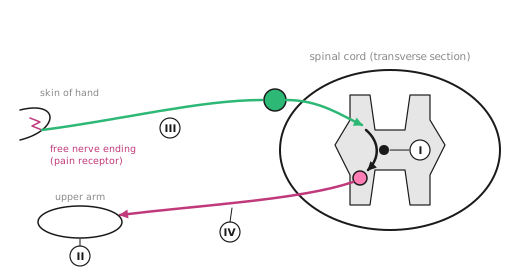
C3.1.5, C3.1.9A pain reflex arc
Number the steps in order.
A skeletal muscle, the effector, contracts and pulls the hand away.
A single interneuron in the grey matter passes the impulse on.
A motor neuron carries impulses out to the arm.
A free nerve ending in the skin of the hand, a pain receptor, is stimulated.
A sensory neuron carries impulses into the spinal cord.
A reflex is : the spinal cord integrates it with no decision by the brain. Choosing to pick up a cup is , started in the .
2 of 2Organisms · Interaction and interdependenceName
C3.1.20One-way trafficHL
123
1
2
3
This phytohormone diffuses into cells freely but cannot diffuse out. When every cell puts the proteins that let it out on the same side, it is moved from cell to cell by and becomes in one part of the plant.
C3.1.19, C3.1.22, C3.1.23Plant hormonesHL
Phytohormone
Produced in
Transported to
Auxin
Cytokinin
Ethylene
ripening fruit
nearby fruit, as a gas
The two-way traffic of auxin and cytokinin keeps root and shoot growth . Ripening makes fruit release more ethylene, which speeds ripening: , so all the fruit ripen quickly and together.
C3.1.16Moving food along
Starting to swallow, and egestion of faeces, are , controlled by the . In between, waves of muscle contraction called push food along the gut. They are , coordinated by the in the gut wall.
C3.1Integration of body systems
C3.1 examThe pathway of a pain reflex
1234
1
2
3
4
C3.1.14, C3.1.15Heart rate and breathing
Heart rate
Ventilation rate
Receptors
and chemoreceptors, in the walls of the aorta and
chemoreceptors in the brainstem
What they detect
blood ; blood pH, O₂ and CO₂
a fall in blood pH, as CO₂ forms
Signals go to
the heart, changing its rate and stroke volume
the and intercostal muscles
Both responses are coordinated by the , which sends nerve impulses to the effectors.
C3.1.17, C3.1.18, C3.1.21Growing towards lightHL
Light from one side makes auxin build up on the side of the shoot. There it makes cells secrete into the cell wall, loosening between cellulose molecules, so those cells elongate faster and the shoot bends towards the light: positive . Measuring the angle of curvature with a protractor gives data.
Every box on the sheet with its gaps filled in, as the subtopic reads in full.
GapsParts working together
In a multicellular organism, cells form tissues, which form organs; these work together in organ systems: a hierarchy of subsystems. Every level needs coordination to carry out its overall function. Integrated, the body has emergent properties: a cheetah is a deadly predator only because its muscles, eyes, brain, heart and lungs act as one.
TableTwo signalling systems
Nervous system
Endocrine system
Signal
nerve impulses
hormones
Carried
along neurons
in the blood
Speed
very fast
slower
Effect lasts
a short time
longer
Reaches
particular muscles or glands
any cell with the matching receptor
Organs are also integrated by the transport of materials and energy: oxygen from the lungs and glucose from the small intestine reach every organ by the same route as endocrine signals.
LabelThe brain in section
cerebral hemisphere
cerebellum
medulla oblongata
spinal cord
The brain combines information from many inputs at once, and it is where learning and memory happen. The folded part at the back coordinates skeletal muscle contraction, keeping movements smooth and the body in balance.
OrderA pain reflex arc
A free nerve ending in the skin of the hand, a pain receptor, is stimulated.
A sensory neuron carries impulses into the spinal cord.
A single interneuron in the grey matter passes the impulse on.
A motor neuron carries impulses out to the arm.
A skeletal muscle, the effector, contracts and pulls the hand away.
A reflex is involuntary: the spinal cord integrates it with no decision by the brain. Choosing to pick up a cup is conscious, started in the cerebral hemispheres.
LabelA nerve, cut across
protective sheath
myelin sheath
axon
unmyelinated fibre
A nerve is a bundle of fibres from two kinds of neuron: sensory neurons carry impulses from receptor cells into the CNS, and motor neurons carry impulses from the CNS to the muscles, stimulating them to contract.
LabelNerves meet hormones
hypothalamus
pituitary gland
pineal gland
The gland hanging below the brain secretes hormones that control many other glands, and is itself controlled by the region just above it, which links the nervous system to the endocrine system. The small gland near the centre secretes melatonin when it is dark, so levels peak at night: a circadian rhythm that sets the cycle of sleeping and waking.
GapsReady for action
Before vigorous activity the adrenal glands secrete epinephrine (adrenaline). It raises heart rate and stroke volume, widens the bronchioles, diverts blood to the skeletal muscles by dilating their arterioles, and makes the liver break down glycogen, so more oxygen and glucose reach the tissues doing the work.
TableHeart rate and breathing
Heart rate
Ventilation rate
Receptors
baroreceptors and chemoreceptors, in the walls of the aorta and carotid arteries
chemoreceptors in the brainstem
What they detect
blood pressure; blood pH, O₂ and CO₂
a fall in blood pH, as CO₂ forms carbonic acid
Signals go to
the heart, changing its rate and stroke volume
the diaphragm and intercostal muscles
Both responses are coordinated by the medulla, which sends nerve impulses to the effectors.
GapsMoving food along
Starting to swallow, and egestion of faeces, are voluntary, controlled by the CNS. In between, waves of muscle contraction called peristalsis push food along the gut. They are involuntary, coordinated by the enteric nervous system in the gut wall.
GapsGrowing towards light HL
Light from one side makes auxin build up on the shaded side of the shoot. There it makes cells secrete hydrogen ions into the cell wall, loosening cross links between cellulose molecules, so those cells elongate faster and the shoot bends towards the light: positive phototropism. Measuring the angle of curvature with a protractor gives quantitative data.
LabelOne-way traffic HL
auxin efflux carrier
cell wall
auxin
This phytohormone diffuses into cells freely but cannot diffuse out. When every cell puts the proteins that let it out on the same side, it is moved from cell to cell by active transport and becomes concentrated in one part of the plant.
TablePlant hormones HL
Phytohormone
Produced in
Transported to
Auxin
shoot tips
roots
Cytokinin
root tips
shoots
Ethylene
ripening fruit
nearby fruit, as a gas
The two-way traffic of auxin and cytokinin keeps root and shoot growth integrated. Ripening makes fruit release more ethylene, which speeds ripening: positive feedback, so all the fruit ripen quickly and together.
 Biology by Bradford
 1234
1234