The subtopic in the middle and 13 tasks round it: label three diagrams, complete three tables, put a process in order and fill 68 gaps. Every box is standard level. Type into the blanks and check them, or print it on A4, Letter or A3 with an answer key.
Paper
Each subtopic on a landscape page, as shuffled and chosen on screen.
C3.2
Defence against disease
1 of 2Organisms · Interaction and interdependence
Hover over a box to see it. Untick it to leave it off this sheet and its printout.
Name
C3.2.4, C3.2.7Innate and adaptive
Innate system
Adaptive system
Responds to
broad categories of pathogen
pathogens
Cells
Over a lifetime
does not change
builds up a of pathogens met, so it becomes more effective
The adaptive system recognises : mostly on a pathogen's outer surface. Those on red blood cells can trigger antibody production after a transfusion of the wrong .
C3.2.6, C3.2.8, C3.2.9From one cell to many
1234
1
2
3
4
Lymphocytes circulate in the blood and also collect in . The body has a vast number of B-cells, each able to make one type of antibody. A B-cell is activated only when it binds the molecule it matches and is touched by a lymphocyte activated by that same molecule. It then divides by into a clone.
C3.2.1Causes of infection
Disease-causing organisms, or , include viruses, bacteria, and protists. No are known to cause disease in humans. Careful observation drove progress: Semmelweis cut deaths from childbed fever in Vienna by making doctors wash their , and John Snow traced a cholera outbreak in London to one water .
C3.2.2First line of defence
The skin is a barrier: its outer layer is tough, dry and made of dead cells packed with . It is also a barrier, as its secretions are slightly and contain substances that kill bacteria. Mucous membranes line the airways and gut, where sticky traps pathogens.
C3.2Defence against disease
C3.2.10, C3.2.16A second encounter
Immunity is the ability to eliminate an infectious disease. It comes from long-lived : on a second exposure they make the specific antibody and in greater amounts. A vaccine contains , or coding for them, so it builds immunity without causing the disease.
C3.2.3Sealing a cut
Number the steps in order.
Platelets at the wound release clotting factors.
The clotting factors set off a cascade of reactions.
Fibrin threads form a mesh that traps erythrocytes: a clot.
The cascade activates the enzyme thrombin.
Thrombin converts soluble fibrinogen into insoluble fibrin.
Because each step activates the next, the clot forms , sealing the skin against .
C3.2.5A phagocyte at work
12345
1
2
3
4
5
Phagocytes squeeze out of the blood and reach the site of infection by movement. They recognise foreign cells, engulf them by and digest them with .
Word bankacidicamoeboidantigenantigensarchaeabacteriumblood groupchemicalendocytosisfasterfungiglycoproteinshandshelper T-cellhydrolytic enzymeskeratinlymph nodeslymphocyteslysosomememorymemory cellmemory cellsmitosismucusnucleic acidnucleuspathogensphagocytesphysicalplasma cellpseudopodiumpumprapidlyspecificvesicle
C3.2
Defence against disease
2 of 2Organisms · Interaction and interdependenceName
C3.2.13, C3.2.14Antibiotics
Antibiotics block processes in bacteria that do not happen in cells, such as building a bacterial cell . They cannot control viruses, which have no of their own and use the host cell's. Each use of an antibiotic resistant bacteria, which survive and multiply, so careful use is needed to slow the rise of strains.
C3.2.15From animals to us
Disease
Pathogen
How it reaches humans
Tuberculosis
unpasteurised milk or air breathed out by infected cattle
Rabies
virus
a from an infected mammal, often a dog
Japanese encephalitis
virus
the bite of a that fed on infected pigs or birds
COVID-19
virus (SARS-CoV-2)
crossed recently from another species; now spreads between people in airborne
Infectious diseases that pass to humans from other species are : they are common, and most newly emerging human diseases start this way.
C3.2.11, C3.2.12Infected by HIV
HIV passes between people in body fluids: in semen and vaginal fluid during unprotected , in blood on shared , and from mother to baby during pregnancy or birth, or in . It infects and kills , so fewer B-cells are activated and fewer antibodies are made. Opportunistic infections take hold: develops.
C3.2Defence against disease
C3.2.17When most are immune
If a high enough of a population is immune, an infected person rarely meets a one, so transmission is impeded and an cannot take hold. This also shields people who cannot be vaccinated. Vaccines are rigorously tested: the risk of side effects is very small, but not .
C3.2.18COVID-19 by numbers
Week
New cases in one town
Percentage change on the week before
1
1600
(first week)
2
2400
%
3
1800
%
4
1440
%
Percentage change = change ÷ × 100. In week 4, 30 in every 100 000 vaccinated people caught it, against 120 in every 100 000 unvaccinated: taken relative to the unvaccinated rate, a percentage difference of %.
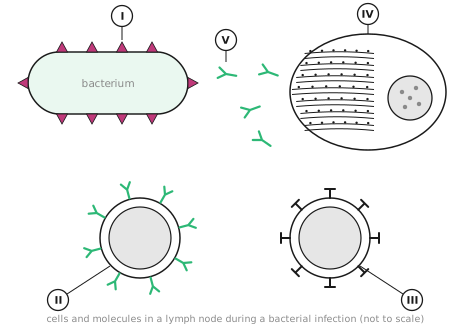
C3.2 examSome of the cells and molecules present in a lymph
12345
1
2
3
4
5
Word bank+50−20−2575AIDSantibodyantigenB-lymphocytebacteriumbitebreast milkdropletsepidemiceukaryotichelper T-cellsherd immunitymetabolismmosquitomultiresistantneedlesoriginal valuepercentageplasma cellselects forsexsusceptibleT-lymphocytewallzerozoonoses
Answer key
Every box on the sheet with its gaps filled in, as the subtopic reads in full.
GapsCauses of infection
Disease-causing organisms, or pathogens, include viruses, bacteria, fungi and protists. No archaea are known to cause disease in humans. Careful observation drove progress: Semmelweis cut deaths from childbed fever in Vienna by making doctors wash their hands, and John Snow traced a cholera outbreak in London to one water pump.
GapsFirst line of defence
The skin is a physical barrier: its outer layer is tough, dry and made of dead cells packed with keratin. It is also a chemical barrier, as its secretions are slightly acidic and contain substances that kill bacteria. Mucous membranes line the airways and gut, where sticky mucus traps pathogens.
OrderSealing a cut
Platelets at the wound release clotting factors.
The clotting factors set off a cascade of reactions.
The cascade activates the enzyme thrombin.
Thrombin converts soluble fibrinogen into insoluble fibrin.
Fibrin threads form a mesh that traps erythrocytes: a clot.
Because each step activates the next, the clot forms rapidly, sealing the skin against pathogens.
TableInnate and adaptive
Innate system
Adaptive system
Responds to
broad categories of pathogen
specific pathogens
Cells
phagocytes
lymphocytes
Over a lifetime
does not change
builds up a memory of pathogens met, so it becomes more effective
The adaptive system recognises antigens: mostly glycoproteins on a pathogen's outer surface. Those on red blood cells can trigger antibody production after a transfusion of the wrong blood group.
LabelA phagocyte at work
pseudopodium
bacterium
lysosome
vesicle
nucleus
Phagocytes squeeze out of the blood and reach the site of infection by amoeboid movement. They recognise foreign cells, engulf them by endocytosis and digest them with hydrolytic enzymes.
LabelFrom one cell to many
helper T-cell
antigen
plasma cell
memory cell
Lymphocytes circulate in the blood and also collect in lymph nodes. The body has a vast number of B-cells, each able to make one specific type of antibody. A B-cell is activated only when it binds the molecule it matches and is touched by a lymphocyte activated by that same molecule. It then divides by mitosis into a clone.
GapsA second encounter
Immunity is the ability to eliminate an infectious disease. It comes from long-lived memory cells: on a second exposure they make the specific antibody faster and in greater amounts. A vaccine contains antigens, or nucleic acid coding for them, so it builds immunity without causing the disease.
GapsInfected by HIV
HIV passes between people in body fluids: in semen and vaginal fluid during unprotected sex, in blood on shared needles, and from mother to baby during pregnancy or birth, or in breast milk. It infects and kills helper T-cells, so fewer B-cells are activated and fewer antibodies are made. Opportunistic infections take hold: AIDS develops.
GapsAntibiotics
Antibiotics block processes in bacteria that do not happen in eukaryotic cells, such as building a bacterial cell wall. They cannot control viruses, which have no metabolism of their own and use the host cell's. Each use of an antibiotic selects for resistant bacteria, which survive and multiply, so careful use is needed to slow the rise of multiresistant strains.
TableFrom animals to us
Disease
Pathogen
How it reaches humans
Tuberculosis
bacterium
unpasteurised milk or air breathed out by infected cattle
Rabies
virus
a bite from an infected mammal, often a dog
Japanese encephalitis
virus
the bite of a mosquito that fed on infected pigs or birds
COVID-19
virus (SARS-CoV-2)
crossed recently from another species; now spreads between people in airborne droplets
Infectious diseases that pass to humans from other species are zoonoses: they are common, and most newly emerging human diseases start this way.
GapsWhen most are immune
If a high enough percentage of a population is immune, an infected person rarely meets a susceptible one, so transmission is impeded and an epidemic cannot take hold. This herd immunity also shields people who cannot be vaccinated. Vaccines are rigorously tested: the risk of side effects is very small, but not zero.
TableCOVID-19 by numbers
Week
New cases in one town
Percentage change on the week before
1
1600
(first week)
2
2400
+50 %
3
1800
−25 %
4
1440
−20 %
Percentage change = change ÷ original value × 100. In week 4, 30 in every 100 000 vaccinated people caught it, against 120 in every 100 000 unvaccinated: taken relative to the unvaccinated rate, a percentage difference of 75 %.
Exam diagramSome of the cells and molecules present in a lymph
 Biology by Bradford
 12345
12345