C4.2.4, C4.2.10Along a food chain
1234
- 1
- 2
- 3
- 4
Each arrow points from the food to the feeder: the direction in which energy and pass. Linked food chains make a food , in which an animal with a varied diet can feed at more than one .
 Biology by Bradford
support
Biology by Bradford
support
The subtopic in the middle and twelve tasks round it: label three diagrams, complete two tables, put a process in order and fill 52 gaps. Every box is standard level. Type into the blanks and check them, or print it on A4, Letter or A3 with an answer key.
Each arrow points from the food to the feeder: the direction in which energy and pass. Linked food chains make a food , in which an animal with a varied diet can feed at more than one .
| Type | Energy source | Carbon source |
|---|---|---|
| Photoautotroph | ||
| Chemoautotroph | of Fe²⁺ or other inorganic chemicals | |
| Heterotroph | food from other organisms | carbon compounds in its food |
Oak trees are photoautotrophs; are chemoautotrophs; wolves and fungi are heterotrophs, which digest their food and the products. Autotrophs need energy to fix carbon and to build . All three release energy by cell .
Energy reaching each trophic level at Silver Springs, Florida. Only % of the producers’ energy reaches the primary consumers. Each level up has fewer or smaller organisms, so less , though a gram of tissue holds no less energy than before. So little is left after a few transfers that the number of in a food chain is limited.
Primary production is the build-up of carbon compounds in biomass by , measured as mass of carbon per unit area per unit time, usually g m⁻² yr⁻¹. Biomes differ: it is high in tropical rainforest and low in desert and tundra. Secondary production, the same build-up by , is always , because much of the carbon eaten is lost as CO₂ and water in .
Light enters an ecosystem and heat leaves, while water, nutrients and animals can cross its edges too: it is an system. In a system only energy passes in and out. That sunlight powers most ecosystems is a scientific : it describes a pattern and predicts well, but does not explain it, and it has exceptions. In deep caves and the deep ocean, energy comes from organic matter that sinks or washes in, or from .
Number the steps in order.
Living things cannot turn heat back into other forms, so energy through an ecosystem rather than cycling round it.
| Route | What happens to the energy |
|---|---|
| Parts not eaten, and organisms that die uneaten | passes to |
| Eaten but not absorbed | egested in |
| Cell respiration | converted to , lost to the surroundings |
| Growth | stored in new biomass: the only part the can take |
No energy transfer is 100% efficient, so heat is released both when ATP is made in respiration and when it is in cells.
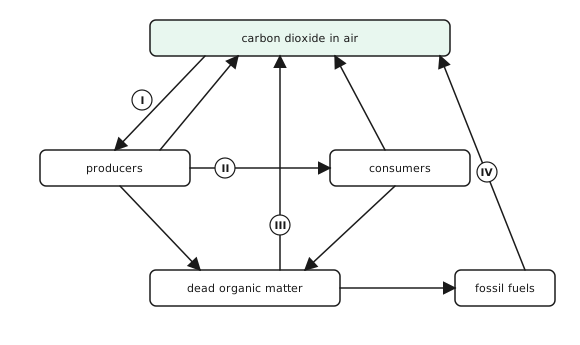
Aerobic respiration depends on the that photosynthesis releases, and photosynthesis on the CO₂ that respiration releases: a vast yearly exchange between autotrophs and heterotrophs. Where photosynthesis takes in more CO₂ than respiration gives out, as in a young, growing forest, an ecosystem is a carbon . Where respiration gives out more, as in a drained peat bog, it is a carbon .
, mostly bacteria and fungi, take their energy from carbon compounds in dead organic matter: , dead parts such as shed leaves, and whole dead organisms. As they digest it they release the elements it held, such as nitrogen and phosphorus, as ions that plants absorb again. So every element living things need is , unlike energy.
In waterlogged soil dead matter is only partly decomposed and builds up as , which over millions of years can turn to coal.
Carbon dioxide in the air at Mauna Loa, Hawaii. Each year it dips from about May to September, while in the northern hemisphere, where most land plants grow, exceeds respiration; it climbs again through autumn and winter. The long-term rise comes mostly from the of coal, oil and natural gas, carbon locked away for of years, and of peat and biomass. Lightning starts some fires, but now burn far more.
 1234
1234Light enters an ecosystem and heat leaves, while water, nutrients and animals can cross its edges too: it is an open system. In a closed system only energy passes in and out. That sunlight powers most ecosystems is a scientific generalization: it describes a pattern and predicts well, but does not explain it, and it has exceptions. In deep caves and the deep ocean, energy comes from organic matter that sinks or washes in, or from chemoautotrophs.
Each arrow points from the food to the feeder: the direction in which energy and biomass pass. Linked food chains make a food web, in which an animal with a varied diet can feed at more than one trophic level.
Living things cannot turn heat back into other forms, so energy flows through an ecosystem rather than cycling round it.
| Type | Energy source | Carbon source |
|---|---|---|
| Photoautotroph | light | CO₂ |
| Chemoautotroph | oxidation of Fe²⁺ or other inorganic chemicals | CO₂ |
| Heterotroph | food from other organisms | carbon compounds in its food |
Oak trees are photoautotrophs; iron-oxidizing bacteria are chemoautotrophs; wolves and fungi are heterotrophs, which digest their food and assimilate the products. Autotrophs need energy to fix carbon and to build macromolecules. All three release energy by cell respiration.
Decomposers, mostly bacteria and fungi, take their energy from carbon compounds in dead organic matter: faeces, dead parts such as shed leaves, and whole dead organisms. As they digest it they release the elements it held, such as nitrogen and phosphorus, as inorganic ions that plants absorb again. So every element living things need is recycled, unlike energy.
Energy reaching each trophic level at Silver Springs, Florida. Only 16% of the producers’ energy reaches the primary consumers. Each level up has fewer or smaller organisms, so less biomass, though a gram of tissue holds no less energy than before. So little is left after a few transfers that the number of trophic levels in a food chain is limited.
| Route | What happens to the energy |
|---|---|
| Parts not eaten, and organisms that die uneaten | passes to decomposers |
| Eaten but not absorbed | egested in faeces |
| Cell respiration | converted to heat, lost to the surroundings |
| Growth | stored in new biomass: the only part the next trophic level can take |
No energy transfer is 100% efficient, so heat is released both when ATP is made in respiration and when it is used in cells.
Primary production is the build-up of carbon compounds in biomass by autotrophs, measured as mass of carbon per unit area per unit time, usually g m⁻² yr⁻¹. Biomes differ: it is high in tropical rainforest and low in desert and tundra. Secondary production, the same build-up by heterotrophs, is always lower, because much of the carbon eaten is lost as CO₂ and water in respiration.
In waterlogged soil dead matter is only partly decomposed and builds up as peat, which over millions of years can turn to coal.
Aerobic respiration depends on the oxygen that photosynthesis releases, and photosynthesis on the CO₂ that respiration releases: a vast yearly exchange between autotrophs and heterotrophs. Where photosynthesis takes in more CO₂ than respiration gives out, as in a young, growing forest, an ecosystem is a carbon sink. Where respiration gives out more, as in a drained peat bog, it is a carbon source.
Carbon dioxide in the air at Mauna Loa, Hawaii. Each year it dips from about May to September, while photosynthesis in the northern hemisphere, where most land plants grow, exceeds respiration; it climbs again through autumn and winter. The long-term rise comes mostly from the combustion of coal, oil and natural gas, carbon locked away for millions of years, and of peat and biomass. Lightning starts some fires, but humans now burn far more.