The subtopic in the middle and twelve tasks round it: label three diagrams, complete a table, put a process in order and fill 53 gaps. Every standard level statement has a box; the four boxes for higher level only are dashed and badged HL, and drop off for an SL class. Type into the blanks and check them, or print it on A4, Letter or A3 with an answer key.
Paper
Each subtopic on a landscape page, as shuffled and chosen on screen.
A3.1
Diversity of organisms
Organisms · Unity and diversity
Hover over a box to see it. Untick it to leave it off this sheet and its printout.
Name
A3.1.13Horse plus donkeyHL
Members of a species share the same . A horse has 64 chromosomes and a donkey 62, so their hybrid, the mule, has . That is an number, so its chromosomes cannot all pair up when it makes gametes, and a mule is almost always .
A3.1.14Keying out leavesHL
1234
1
2
3
4
Use the key to name each leaf. 1a Leaf split into separate leaflets → 2. 1b Leaf in one piece → 3. 2a Leaflets spread from one point → horse chestnut. 2b Leaflets in pairs along a stalk → ash. 3a Edge with deep rounded lobes → oak. 3b Edge without lobes → beech. Every step of a dichotomous key gives choices, each based on a feature that is easy to see.
A3.1.15Species from a water sampleHL
Number the steps in order.
Sequence the copies.
Collect a sample of water, soil or air from the habitat.
Extract the DNA that organisms have shed into it.
Match each sequence to a reference database to name the species present.
Copy one short, standard gene region many times by PCR.
DNA shed into the surroundings is . The region copied differs from species to species, so it works as a , and the of a whole habitat can be surveyed quickly.
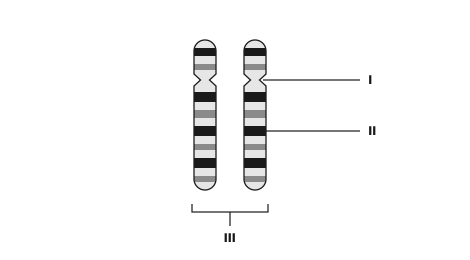
A3.1 examTwo chromosomes taken from a karyogram of a human cell
123
1
2
3
A3.1.1, A3.1.3Naming living things
No two individuals are identical in all their traits: between organisms is a defining feature of life, and its patterns are the basis for naming and classifying them. In the binomial name of the lion, Panthera leo, Panthera is the and leo the . The first part starts with a ; the second is all lower case. The tiger, Panthera tigris, is in the same genus because the two have traits.
A3.1.6, A3.1.7Matching the pairs
Match each chromosome on the right to its partner on the left by its length, where its waist sits and its stripes: 1 pairs with , 2 with and 3 with . Diploid cells have an number of chromosomes, because they come in pairs: 46 in a human body cell. In a karyogram the pairs are numbered roughly from the to the shortest.
A3.1Diversity of organisms
A3.1.8, A3.1.9, A3.1.10Genomes compared
An organism's is all of its genetic information. Members of one species share most of it, differing mainly at single bases: . Between species the differences are much , in base sequence and in size, which is set by the total amount of . As the chart shows, size does not follow an organism's : bread wheat has about five times as much as a human.
A3.1.11Sequencing whole genomes
Whole genome sequencing keeps getting and : the first human genome took 13 years and nearly 3 billion US dollars; now one takes a day or two and a few hundred dollars. Comparing whole genomes is already used to research the between species. In future, reading each patient's genome could allow , with treatment chosen to suit their own genes.
A3.1.2, A3.1.4Defining a species
Morphological concept
Biological concept
A species is a group that…
shares the same
can interbreed and produce offspring
Evidence used
appearance and structure
whether they breed together in nature
Usable on fossils?
yes
A difficulty
males and females may look very
groups counted as separate species sometimes have that can breed
Linnaeus used the first. Neither fits every case, so competing definitions of a species exist.
A3.1.5Where to draw the line
is the splitting of one species into two or more. It usually happens , not in a single step: populations that do not interbreed become more and more in their traits. Partway along, calling two populations one species or two is an decision.
A3.1.6, A3.1.7The story of chromosome 2
1234
1
2
3
4
Humans have 46 chromosomes and chimpanzees . Human chromosome 2 matches two chimpanzee chromosomes set end to end, band for band. The hypothesis that two ancestral chromosomes is : it predicted features that might have been missing, and they were found.
A3.1.12When breeding is no testHL
The biological species concept only works for organisms that breed . Many organisms reproduce , so there is no interbreeding to test whether two of them belong to the same species. In bacteria, genes also pass between different species by , which blurs the line between one species and the next.
Every box on the sheet with its gaps filled in, as the subtopic reads in full.
GapsNaming living things
No two individuals are identical in all their traits: variation between organisms is a defining feature of life, and its patterns are the basis for naming and classifying them. In the binomial name of the lion, Panthera leo, Panthera is the genus and leo the species. The first part starts with a capital letter; the second is all lower case. The tiger, Panthera tigris, is in the same genus because the two have similar traits.
TableDefining a species
Morphological concept
Biological concept
A species is a group that…
shares the same traits
can interbreed and produce fertile offspring
Evidence used
appearance and structure
whether they breed together in nature
Usable on fossils?
yes
no
A difficulty
males and females may look very different
groups counted as separate species sometimes have hybrids that can breed
Linnaeus used the first. Neither fits every case, so competing definitions of a species exist.
GapsWhere to draw the line
Speciation is the splitting of one species into two or more. It usually happens gradually, not in a single step: populations that do not interbreed become more and more different in their traits. Partway along, calling two populations one species or two is an arbitrary decision.
GapsMatching the pairs
Match each chromosome on the right to its partner on the left by its length, where its waist sits and its stripes: 1 pairs with C, 2 with A and 3 with B. Diploid cells have an even number of chromosomes, because they come in pairs: 46 in a human body cell. In a karyogram the pairs are numbered roughly from the longest to the shortest.
LabelThe story of chromosome 2
telomere
centromere
fused telomeres
inactive centromere
Humans have 46 chromosomes and chimpanzees 48. Human chromosome 2 matches two chimpanzee chromosomes set end to end, band for band. The hypothesis that two ancestral chromosomes fused is testable: it predicted features that might have been missing, and they were found.
GapsGenomes compared
An organism's genome is all of its genetic information. Members of one species share most of it, differing mainly at single bases: single-nucleotide polymorphisms. Between species the differences are much larger, in base sequence and in size, which is set by the total amount of DNA. As the chart shows, size does not follow an organism's complexity: bread wheat has about five times as much as a human.
GapsSequencing whole genomes
Whole genome sequencing keeps getting faster and cheaper: the first human genome took 13 years and nearly 3 billion US dollars; now one takes a day or two and a few hundred dollars. Comparing whole genomes is already used to research the evolutionary relationships between species. In future, reading each patient's genome could allow personalized medicine, with treatment chosen to suit their own genes.
GapsWhen breeding is no test HL
The biological species concept only works for organisms that breed sexually. Many organisms reproduce asexually, so there is no interbreeding to test whether two of them belong to the same species. In bacteria, genes also pass between different species by horizontal gene transfer, which blurs the line between one species and the next.
GapsHorse plus donkey HL
Members of a species share the same chromosome number. A horse has 64 chromosomes and a donkey 62, so their hybrid, the mule, has 63. That is an odd number, so its chromosomes cannot all pair up when it makes gametes, and a mule is almost always sterile.
LabelKeying out leaves HL
horse chestnut
ash
oak
beech
Use the key to name each leaf. 1a Leaf split into separate leaflets → 2. 1b Leaf in one piece → 3. 2a Leaflets spread from one point → horse chestnut. 2b Leaflets in pairs along a stalk → ash. 3a Edge with deep rounded lobes → oak. 3b Edge without lobes → beech. Every step of a dichotomous key gives two choices, each based on a feature that is easy to see.
OrderSpecies from a water sample HL
Collect a sample of water, soil or air from the habitat.
Extract the DNA that organisms have shed into it.
Copy one short, standard gene region many times by PCR.
Sequence the copies.
Match each sequence to a reference database to name the species present.
DNA shed into the surroundings is environmental DNA. The region copied differs from species to species, so it works as a barcode, and the biodiversity of a whole habitat can be surveyed quickly.
Exam diagramTwo chromosomes taken from a karyogram of a human cell
 Biology by Bradford
 123
123