 Biology by Bradford
Example A · the draft · The same report, moderated
Example A · a real HL draft, names removed
The annotated draft.
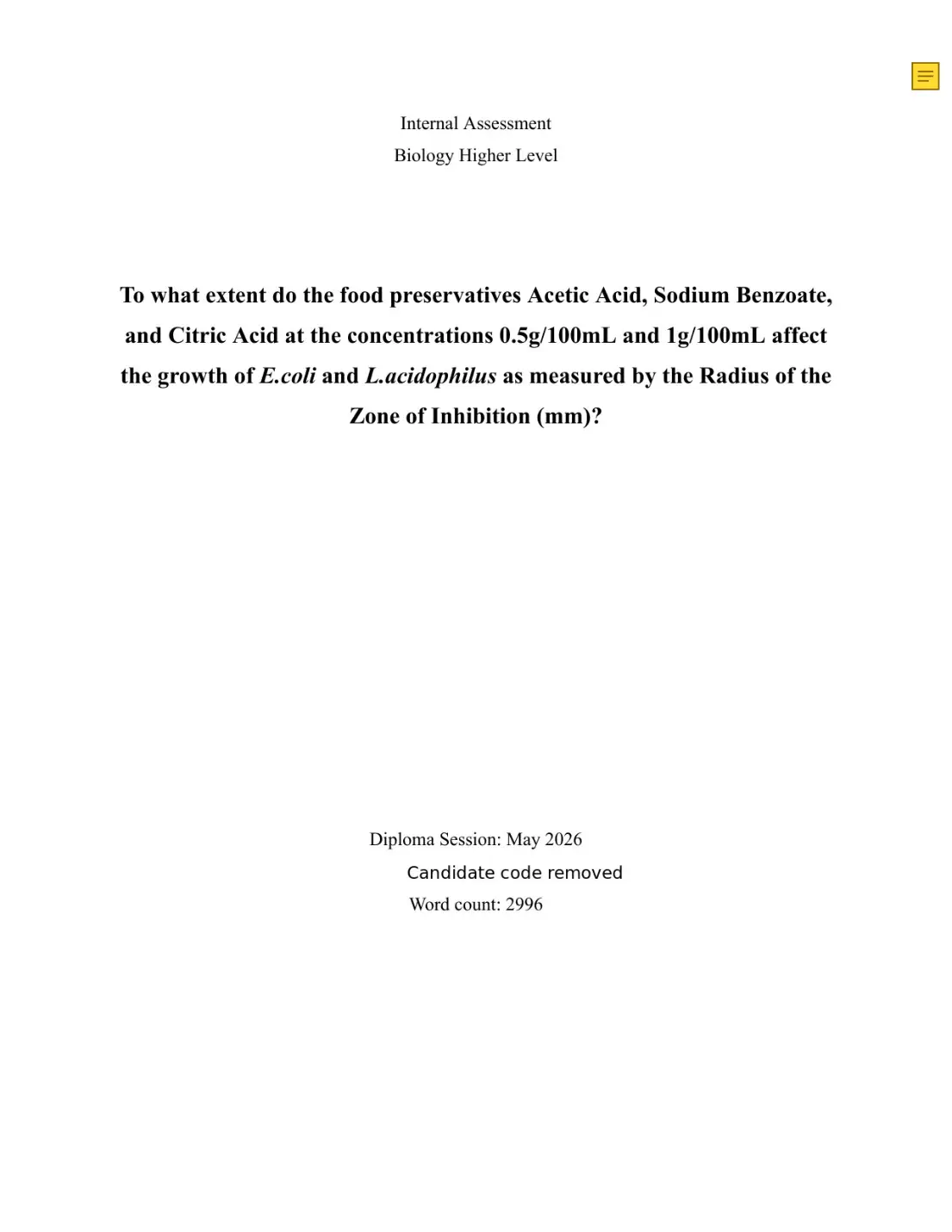
Preservatives and E. coli (HL)“To what extent do the food preservatives acetic acid, sodium benzoate and citric acid at 0.5 g/100 mL and 1 g/100 mL affect the growth of E. coli and L. acidophilus as measured by the radius of the zone of inhibition (mm)?”
- Mark17/24RD 5 · DA 6 · C 3 · E 3
- FromThe feedback sheet for this draft, word for word: the three moves to make first, then each criterion’s star and next steps.
- Notes12 notes on the words they are about, and 1 in the margin where no single phrase fitted.
- HowTap a number on a page to read its note, or a note to find it on the page.
Page 1 of 25
- Research design · to reach 6 · in the margin
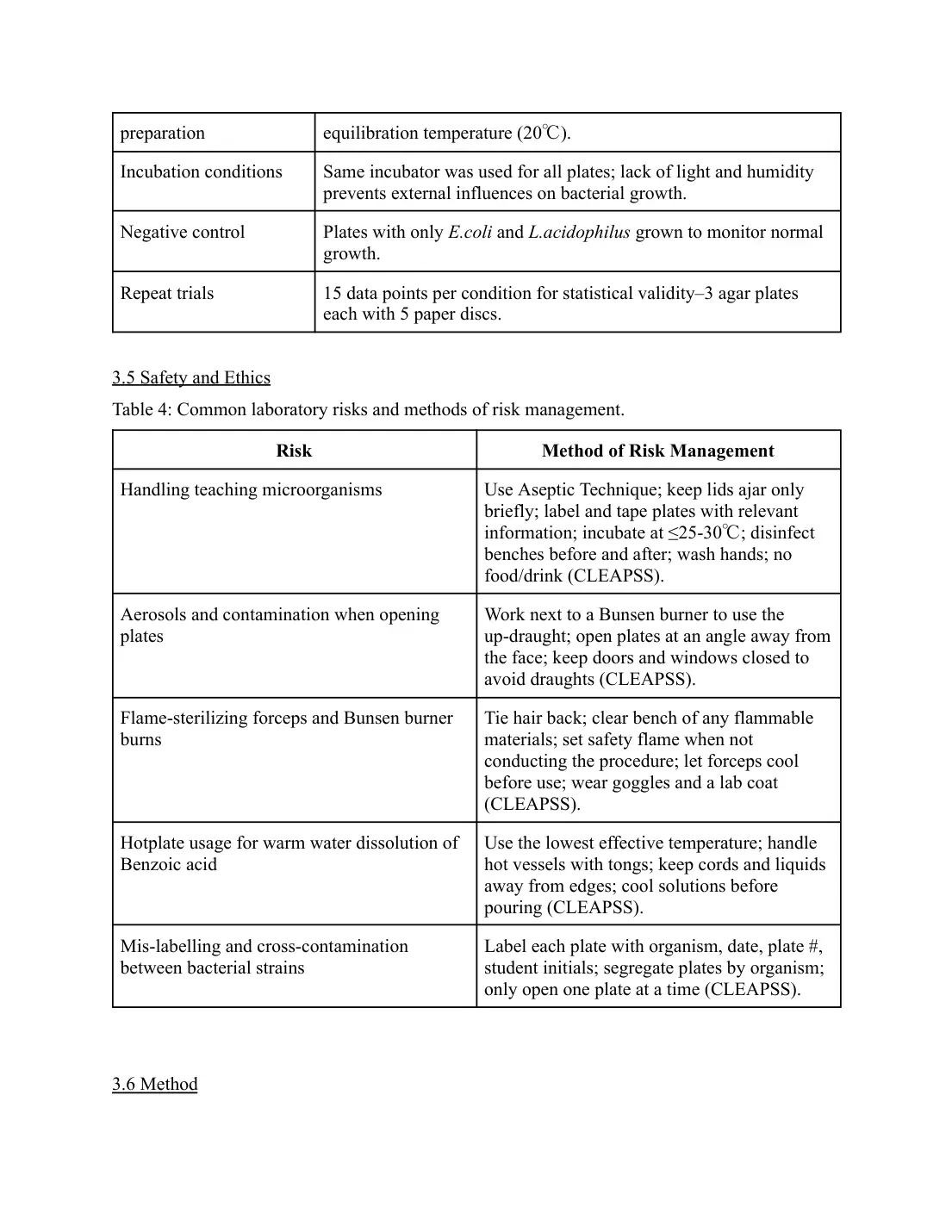
Write both organisms in full in your question, with their strains.
Page 2: no notes show
Page 2 of 25
Page 3 of 25
- Do these three corrections first · number 2
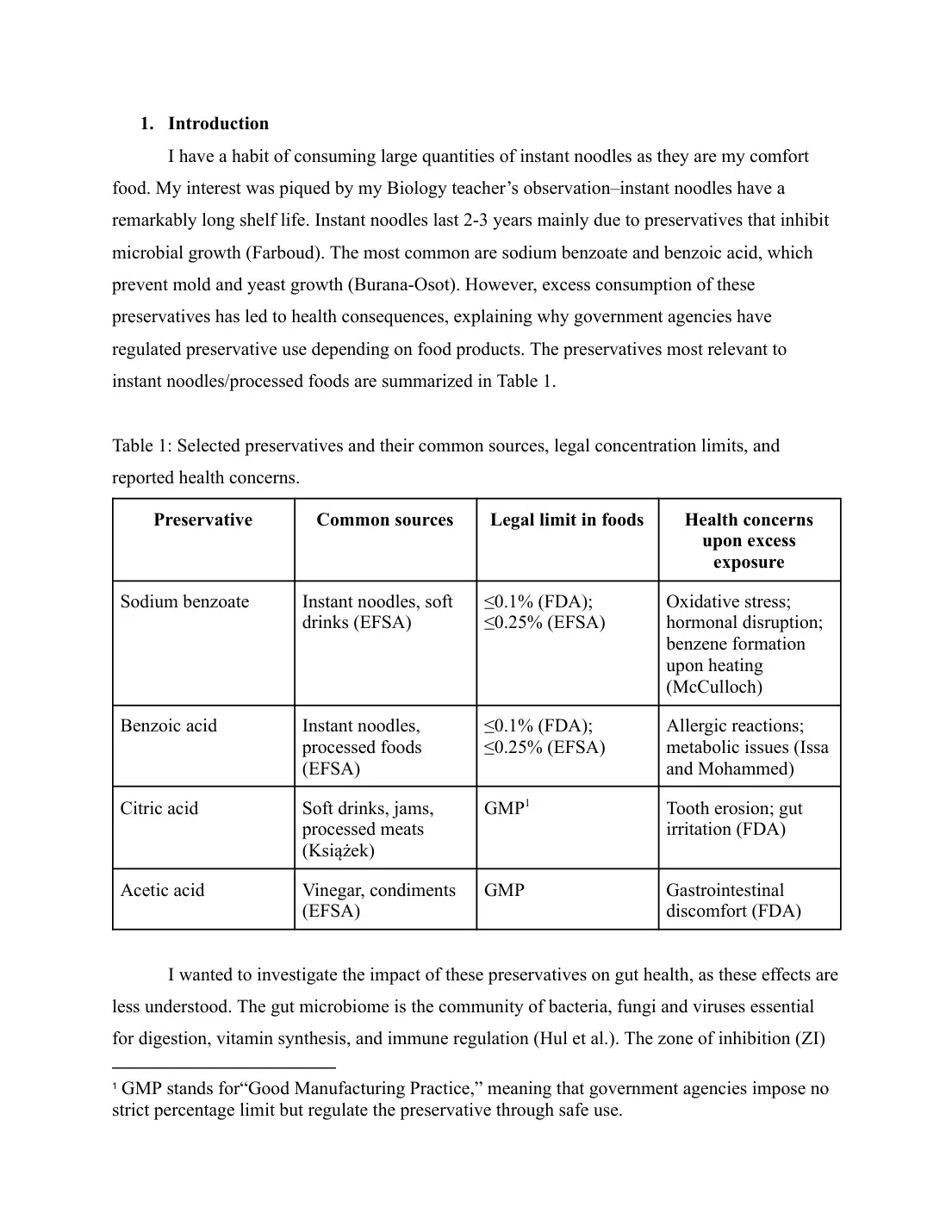
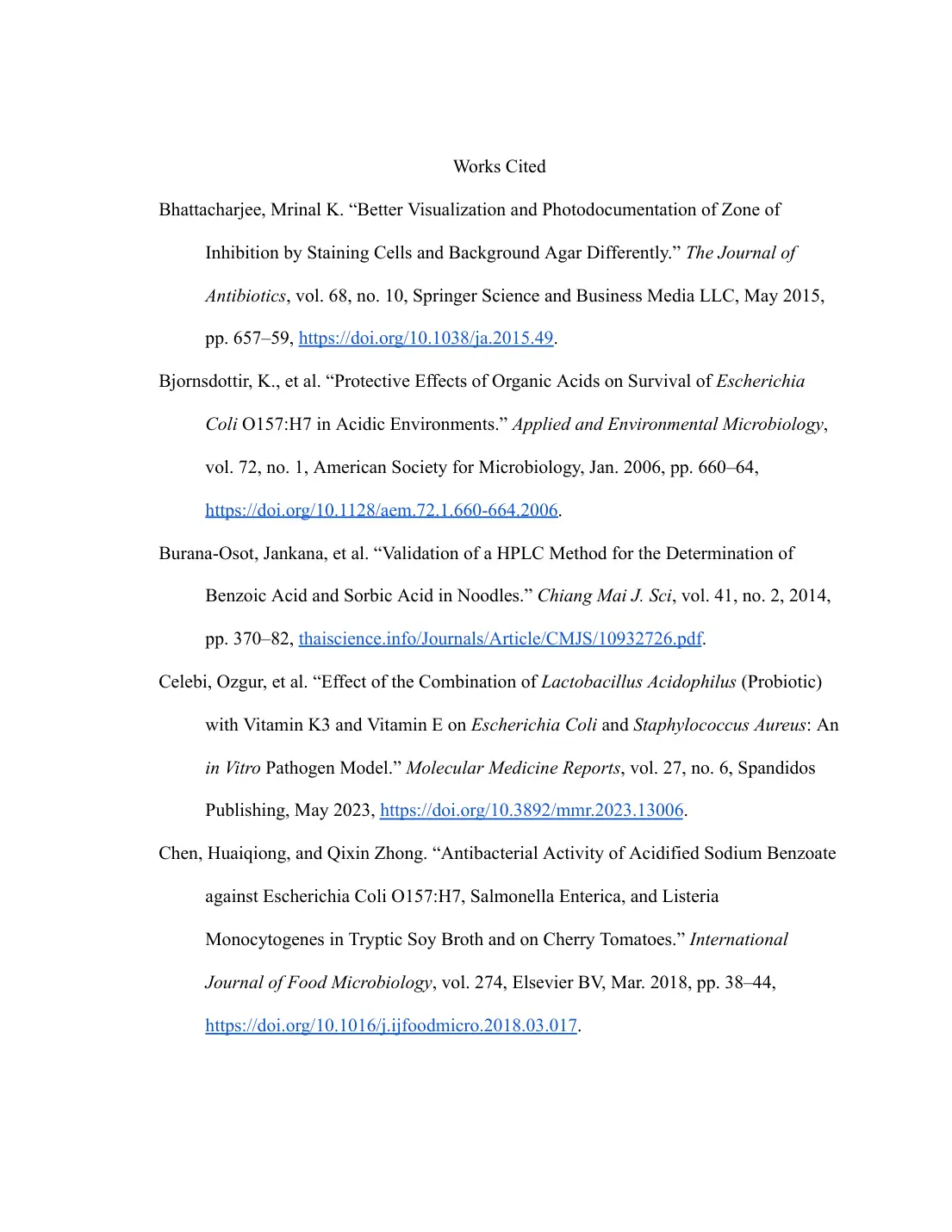
Go back to Chen & Zhong and Zaghloul. You introduce both, then never return. Put your zones beside their findings. First check Chen & Zhong is the paper you describe: its title mentions broth and cherry tomatoes, not sweet potato.
- Research design · keep doing this
Your pretrial at 0.1% set the range, and you dropped benzoic acid with a cited solubility reason.
Pages 4 to 5: no notes show
Page 4 of 25
Page 5 of 25
Page 6 of 25
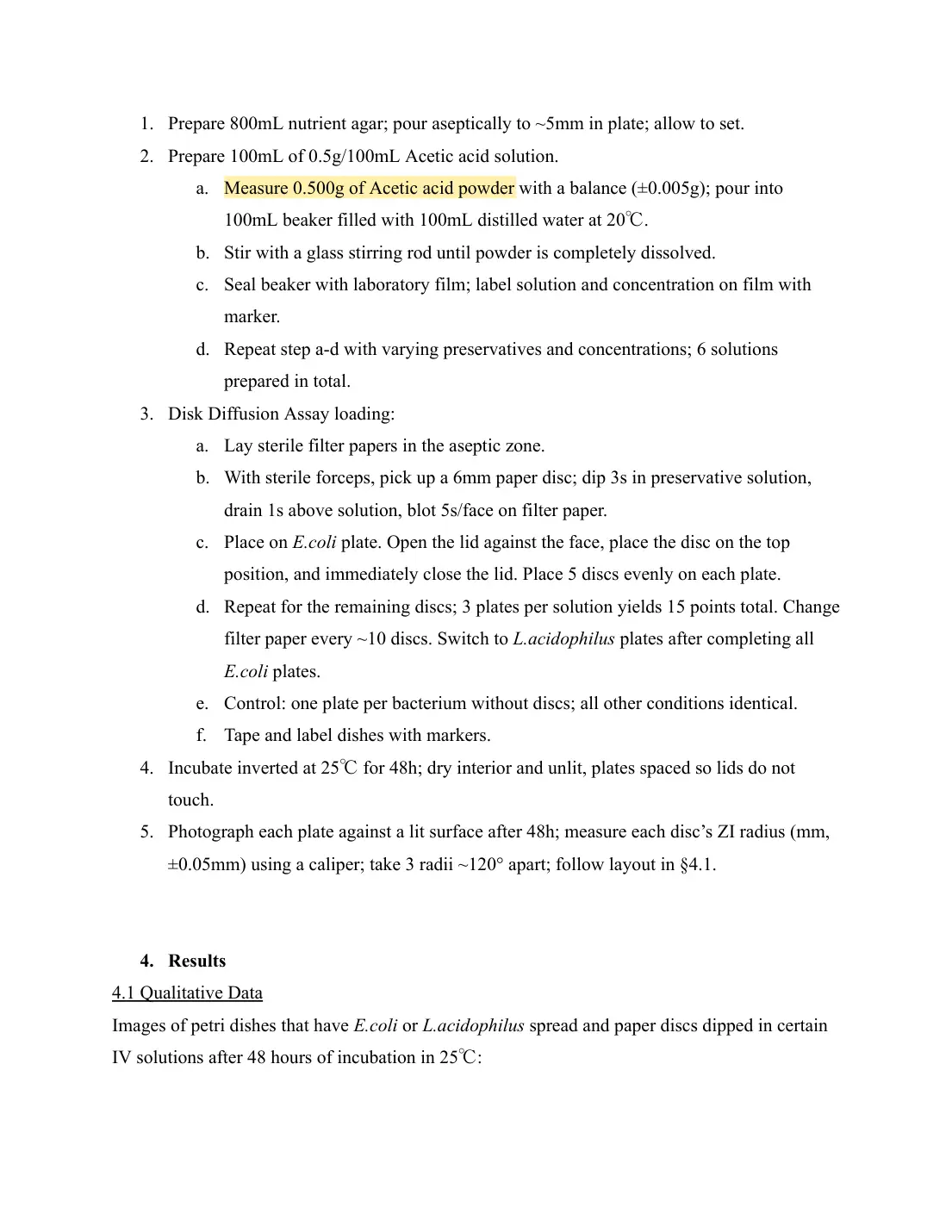
- Research design · to reach 6
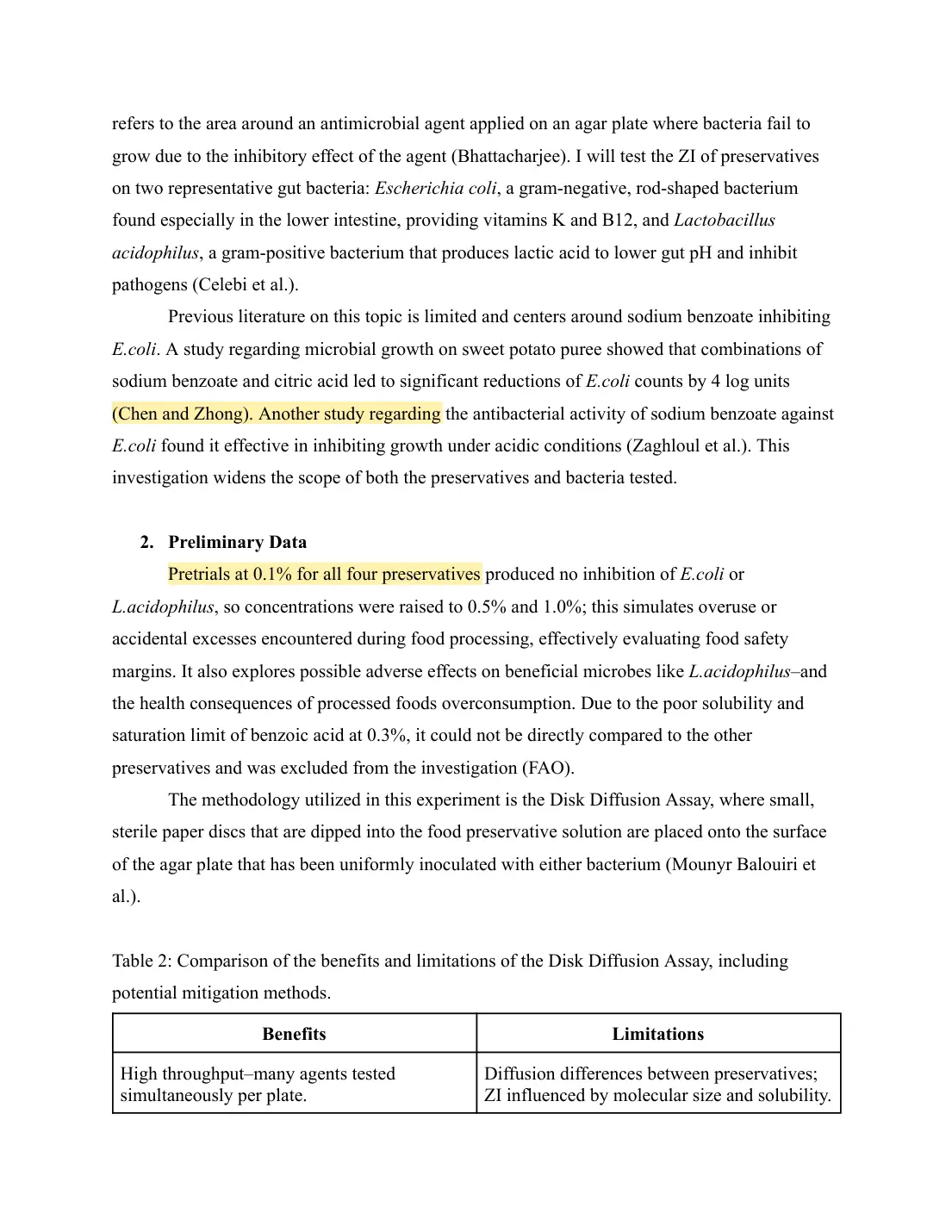
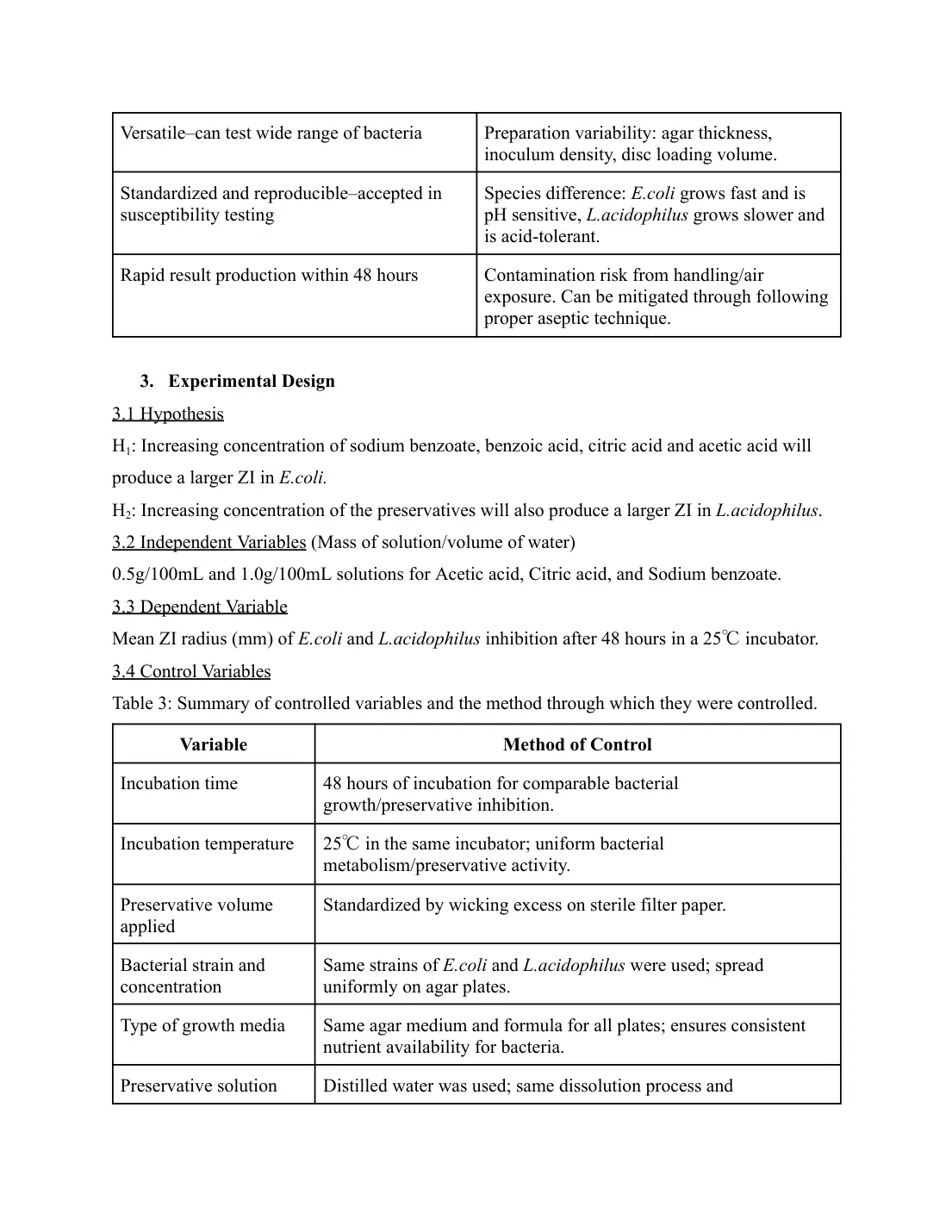
How were plates inoculated: what volume, what density? And acetic acid is a liquid: how did you weigh 0.500 g of “powder”?
Pages 7 to 8: no notes show
Page 7 of 25
Page 8 of 25
Page 9 of 25
- Data analysis · to keep 6 safely
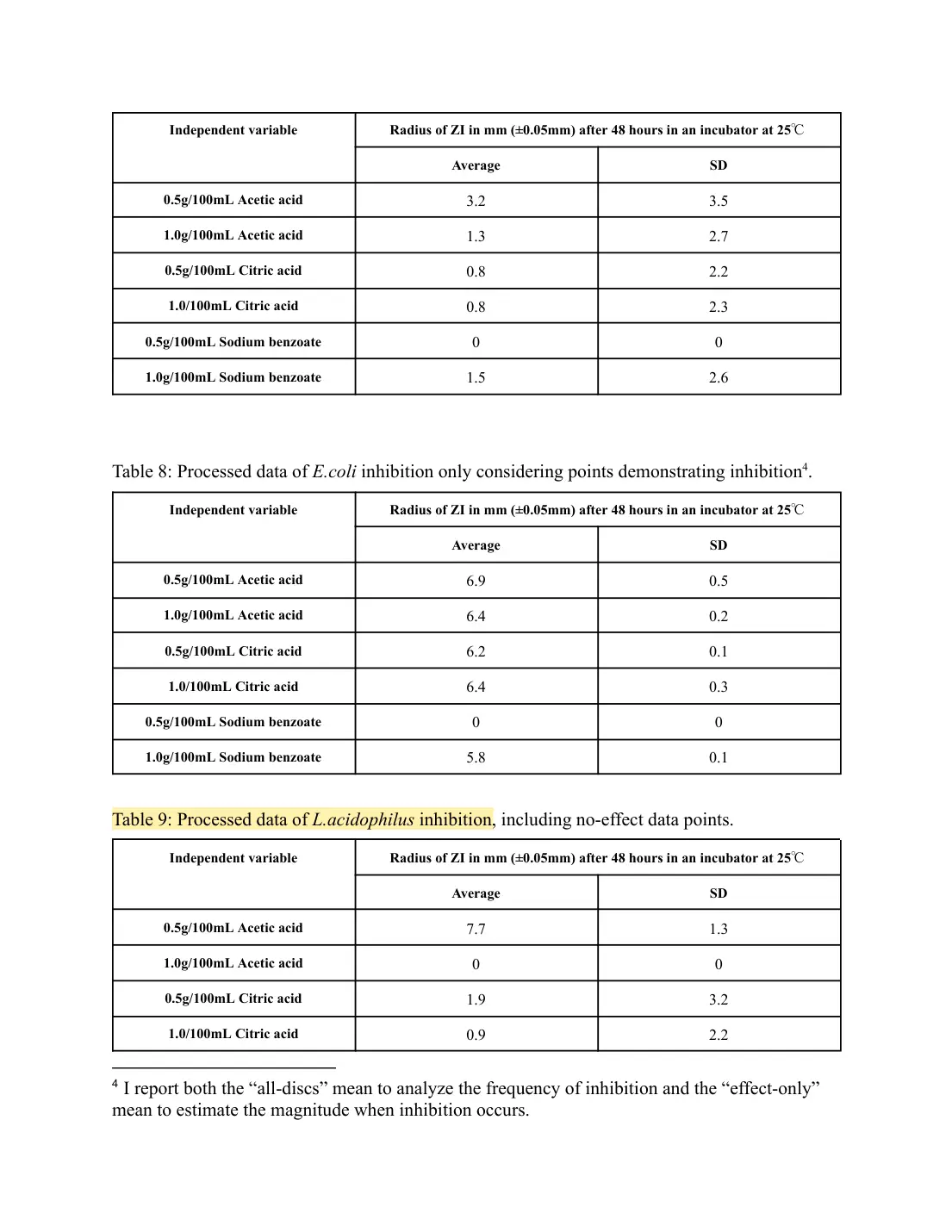
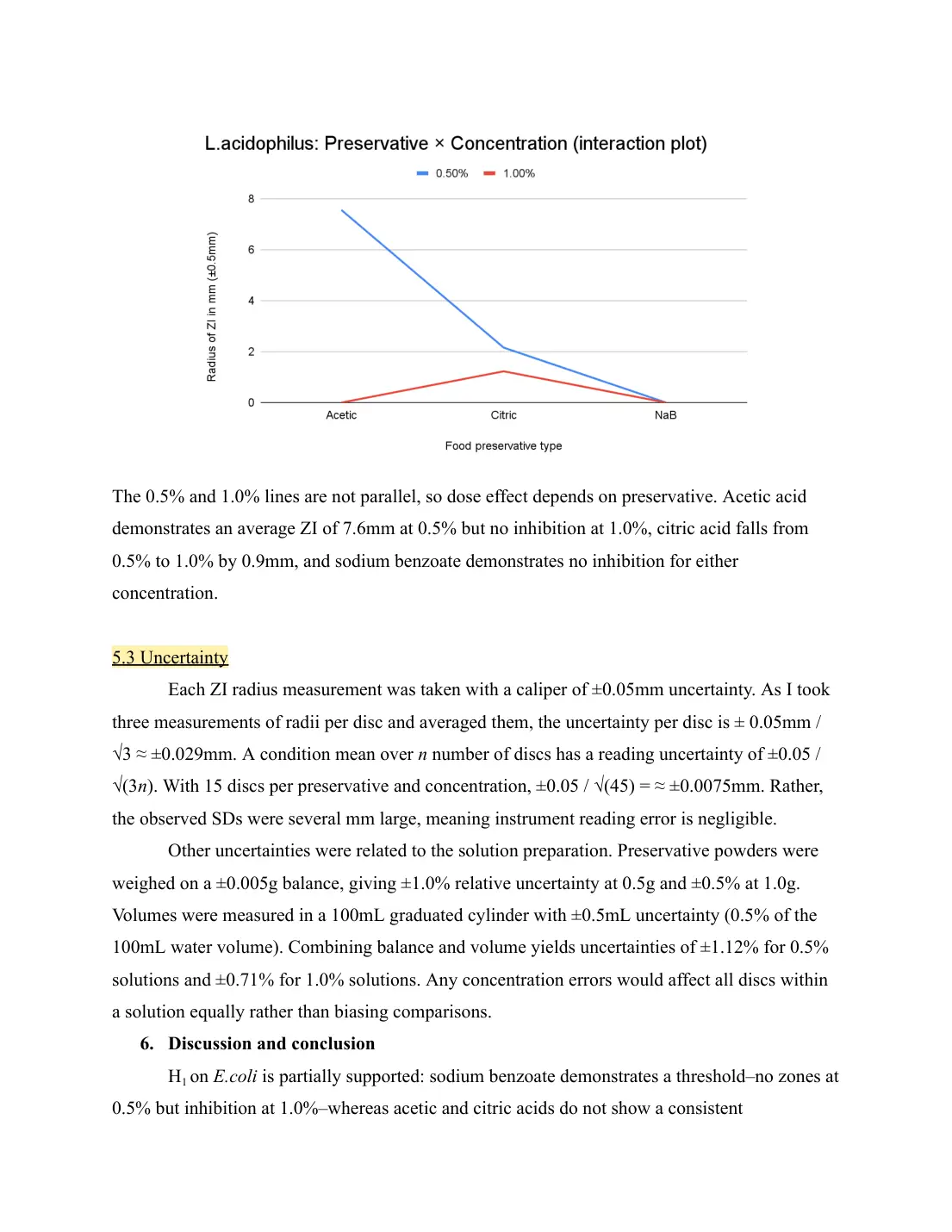
Table 9’s 1.0% citric mean should be 1.1, not 0.9; your interaction plots say ±0.5 mm.
Pages 10 to 16: no notes show
Page 10 of 25
Page 11 of 25
Page 12 of 25
Page 13 of 25
Page 14 of 25
Page 15 of 25
Page 16 of 25
Page 17 of 25
- Data analysis · keep doing this
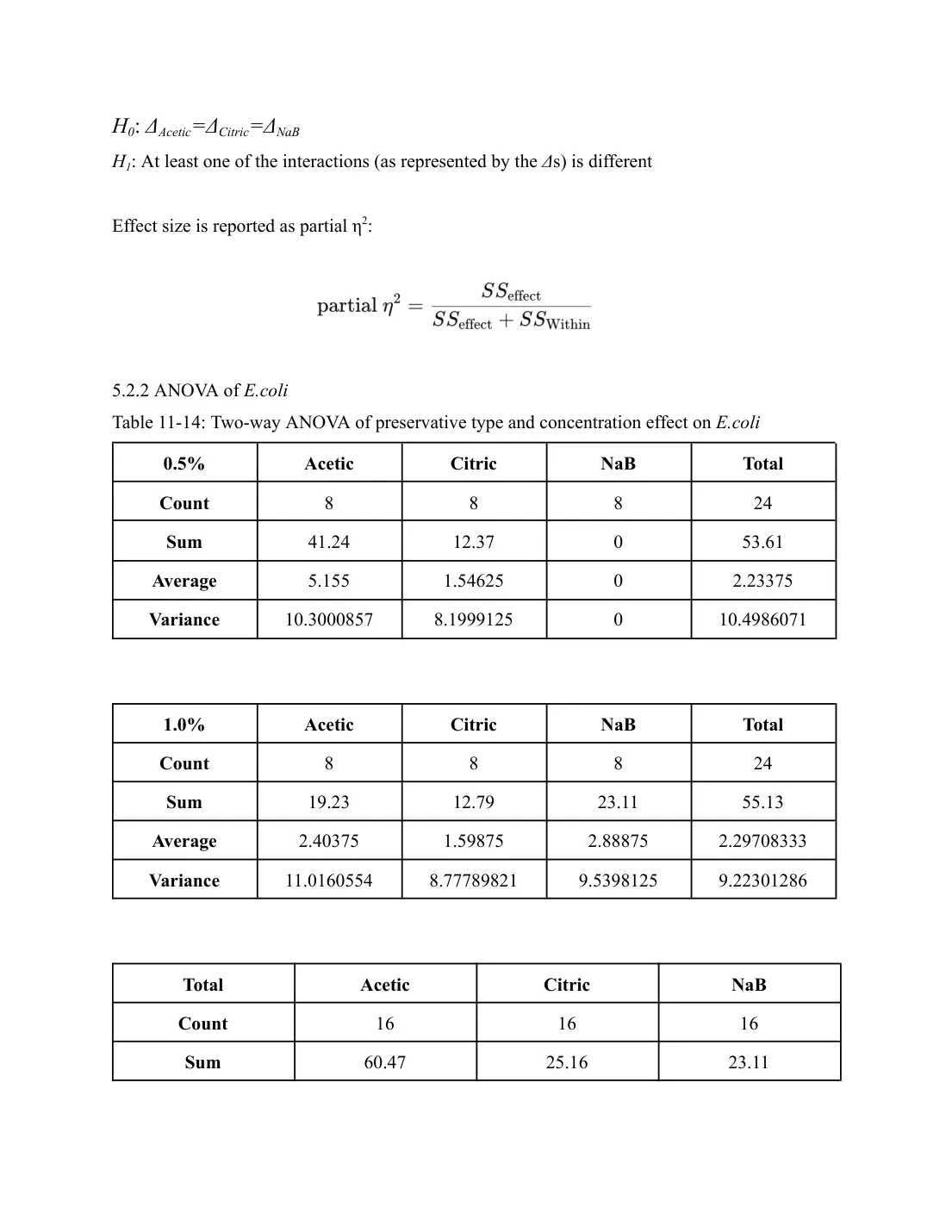
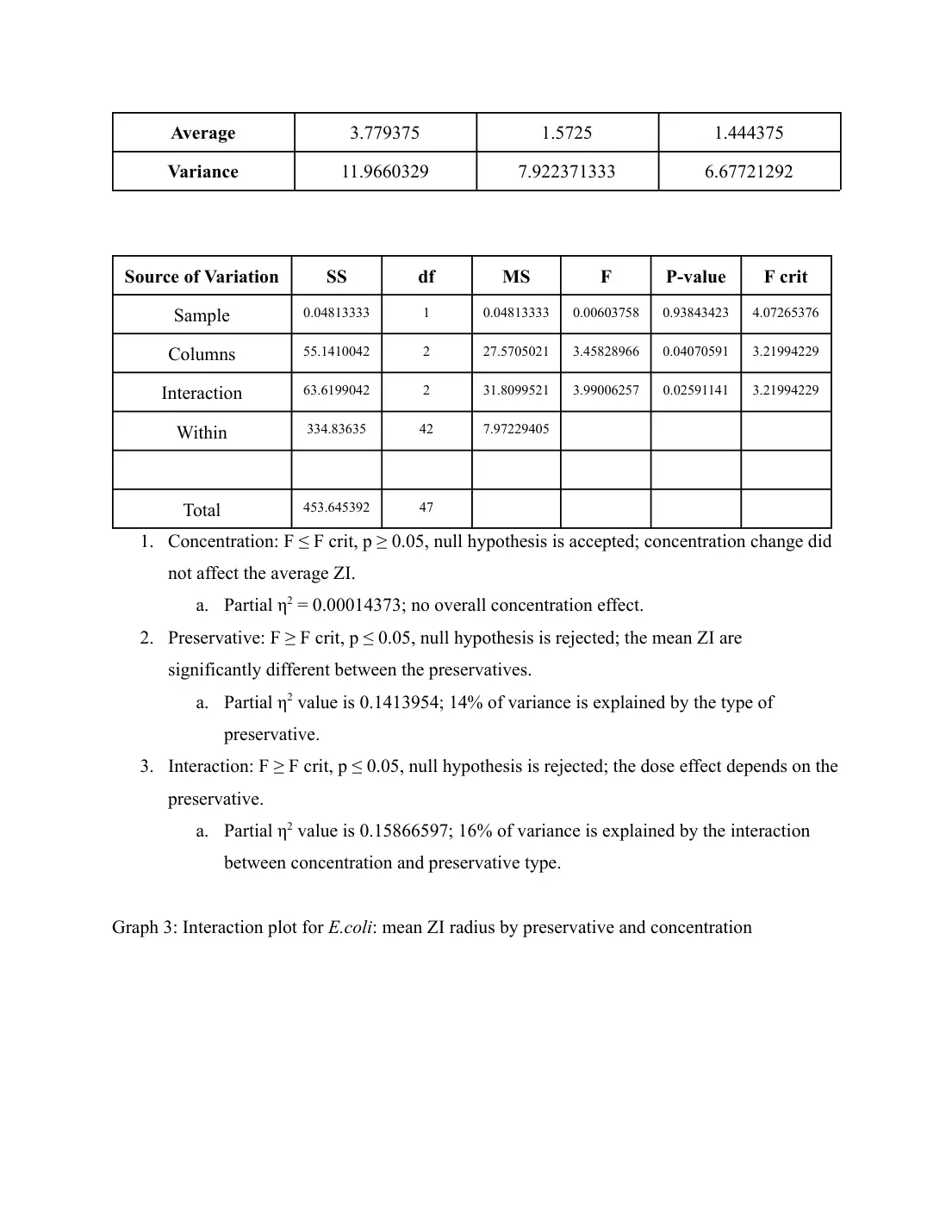
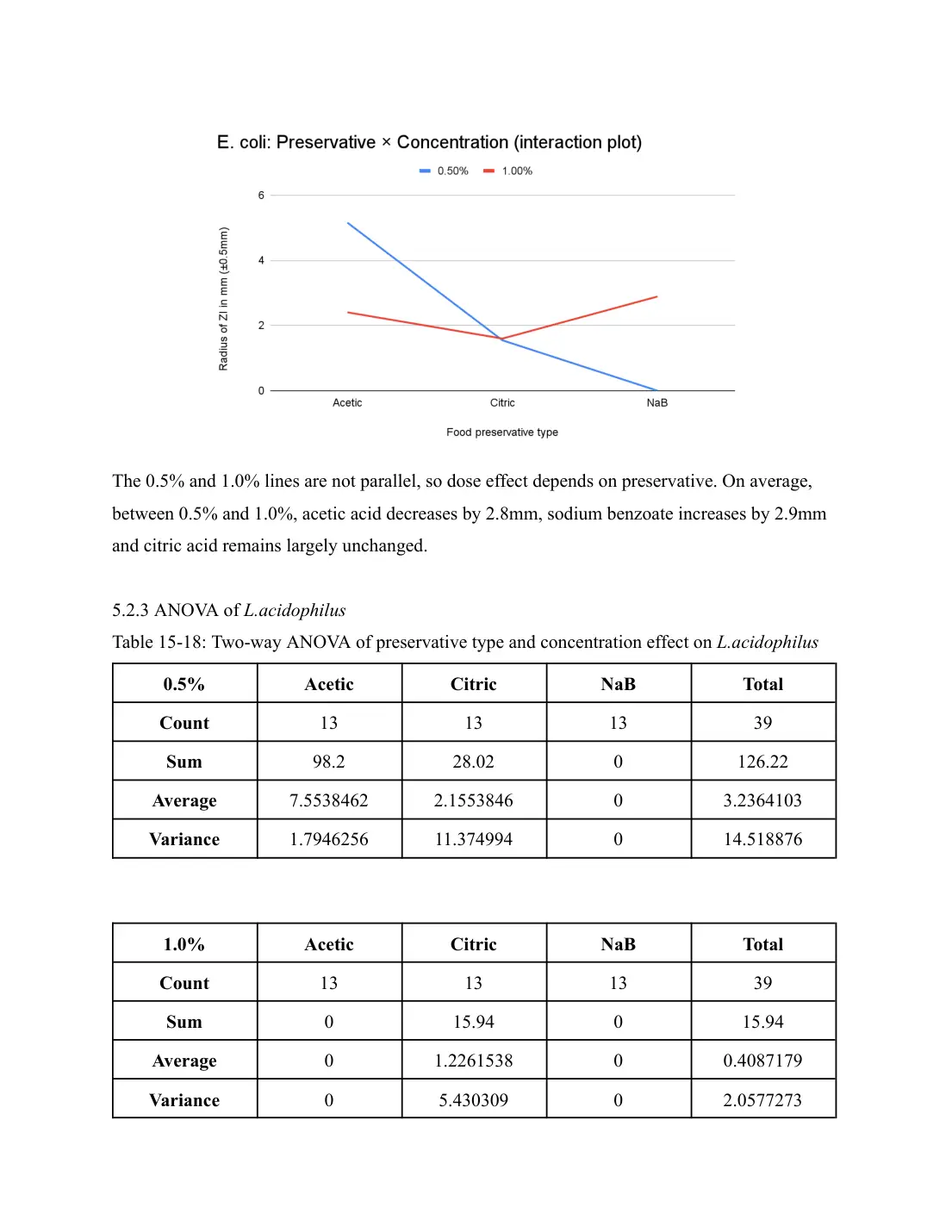
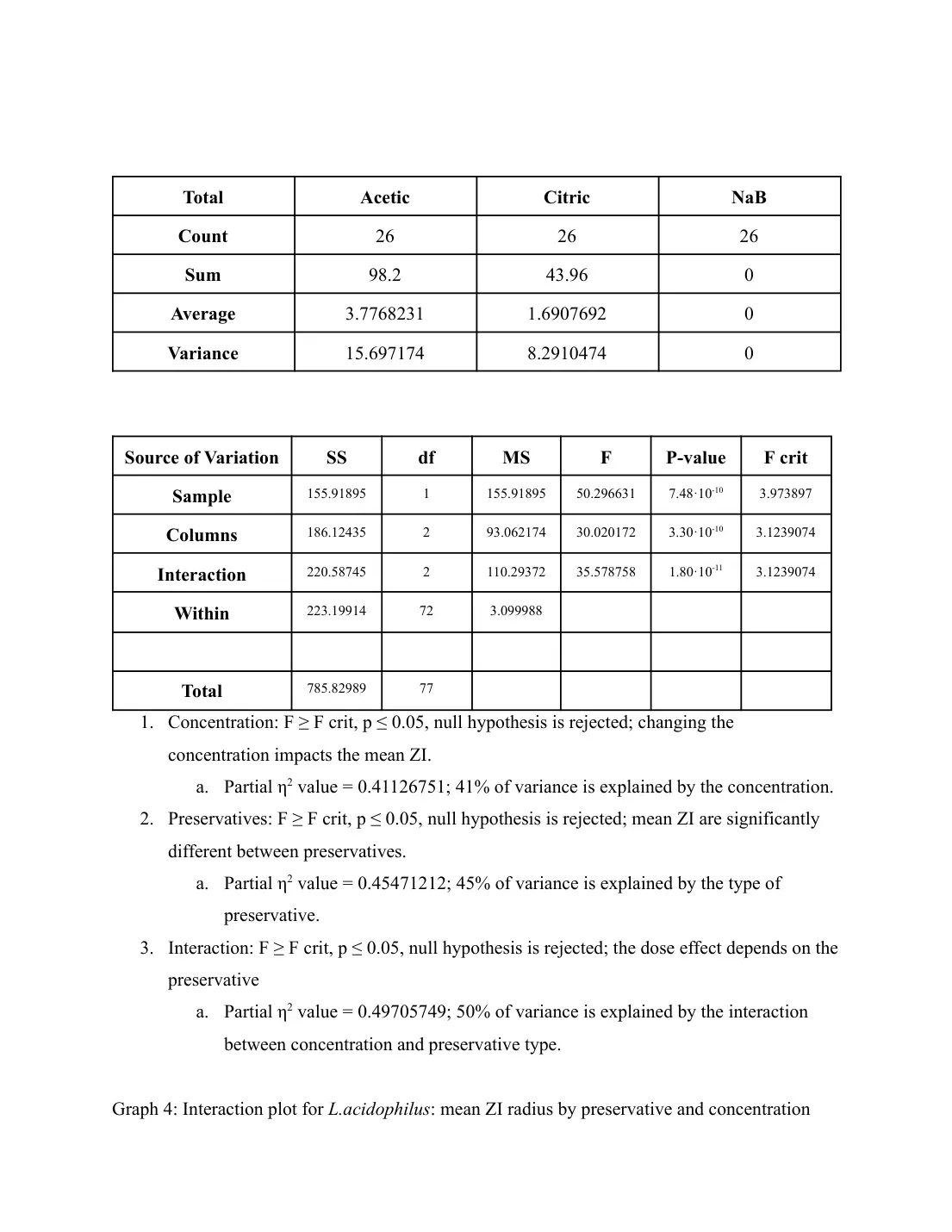
All-disc versus effect-only means, partial η², and section 5.3 showing reading error is tiny beside your SDs. Every ANOVA value I checked reproduces.
Page 18 of 25
- Conclusion · keep doing this
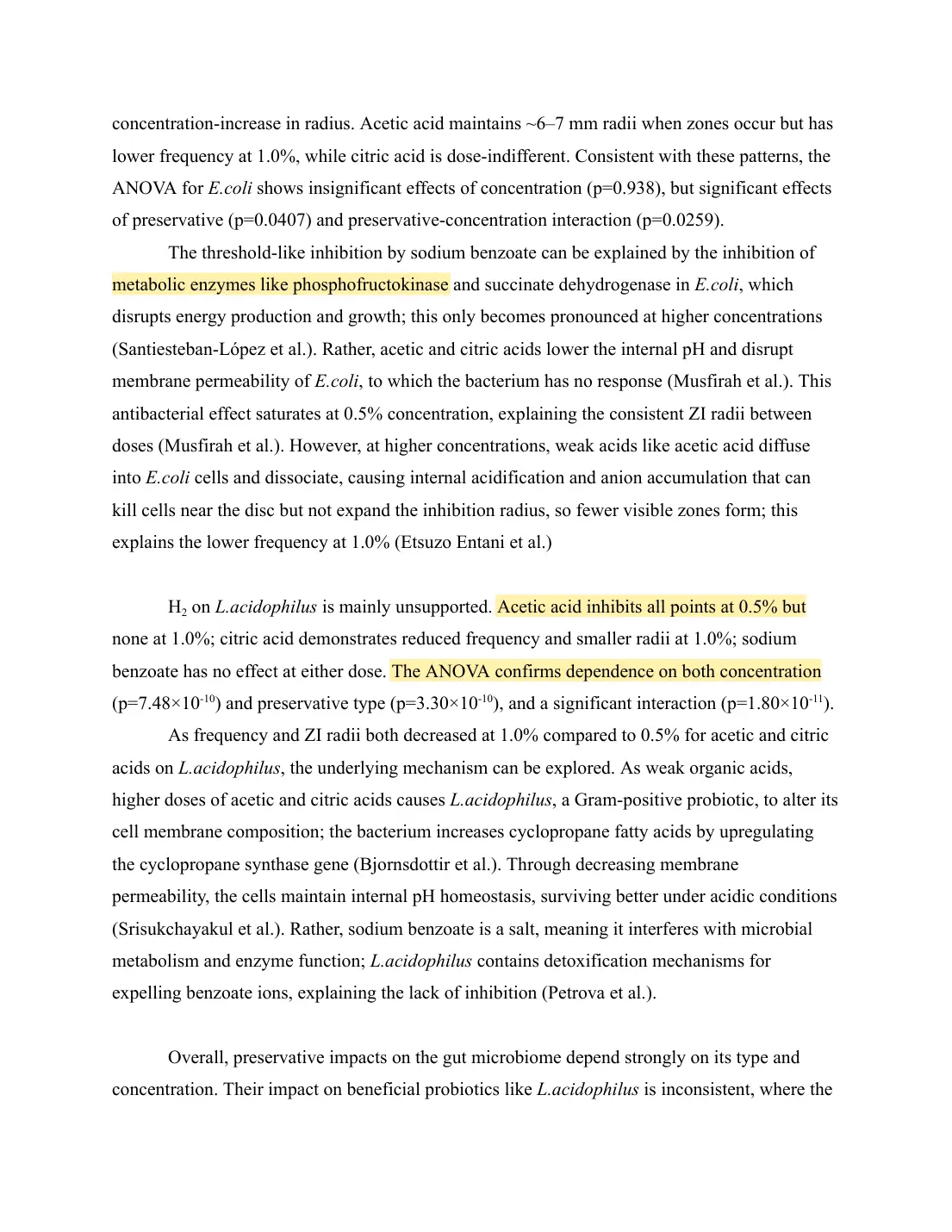
Your mechanisms are well sourced, such as benzoate blocking phosphofructokinase to explain the threshold.
- Do these three corrections first · number 1
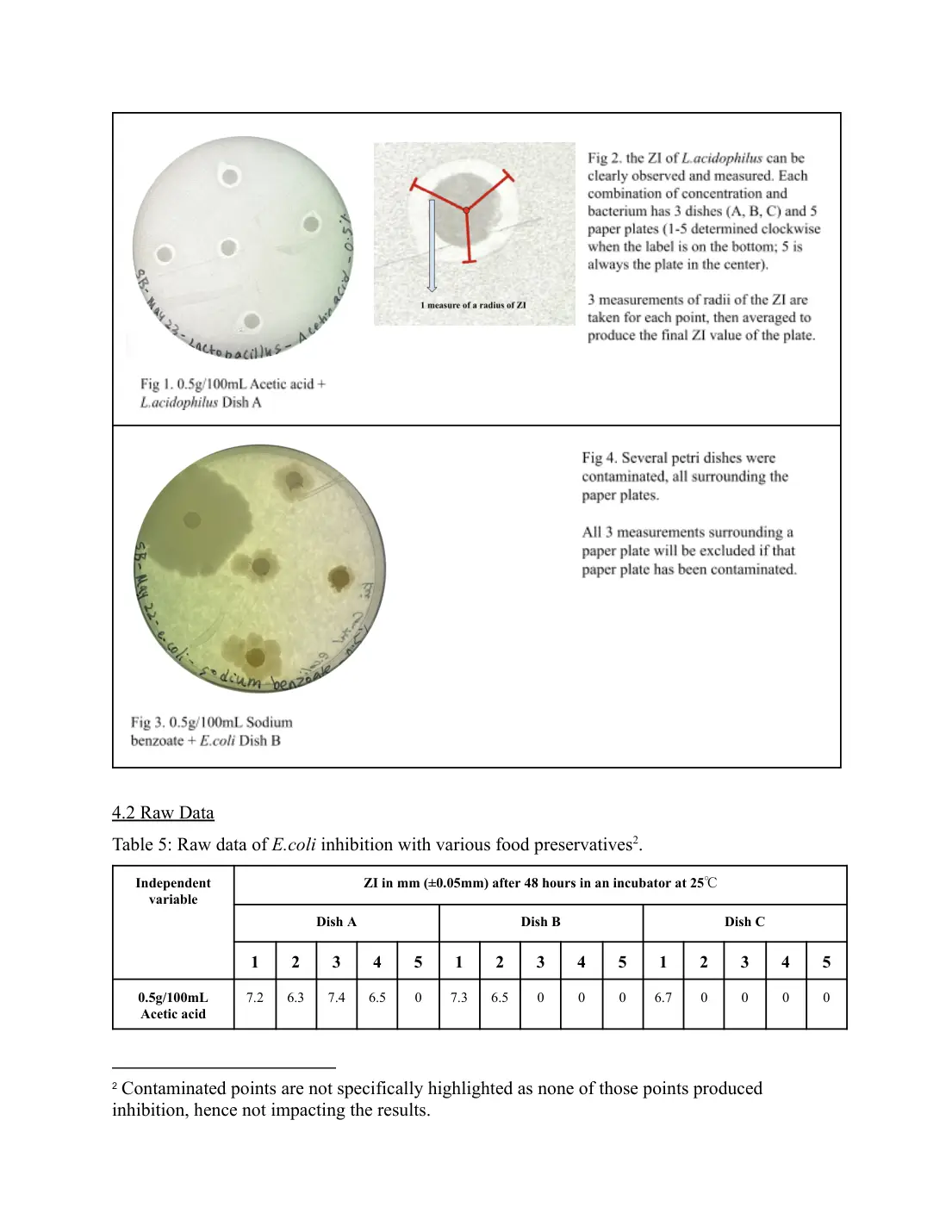
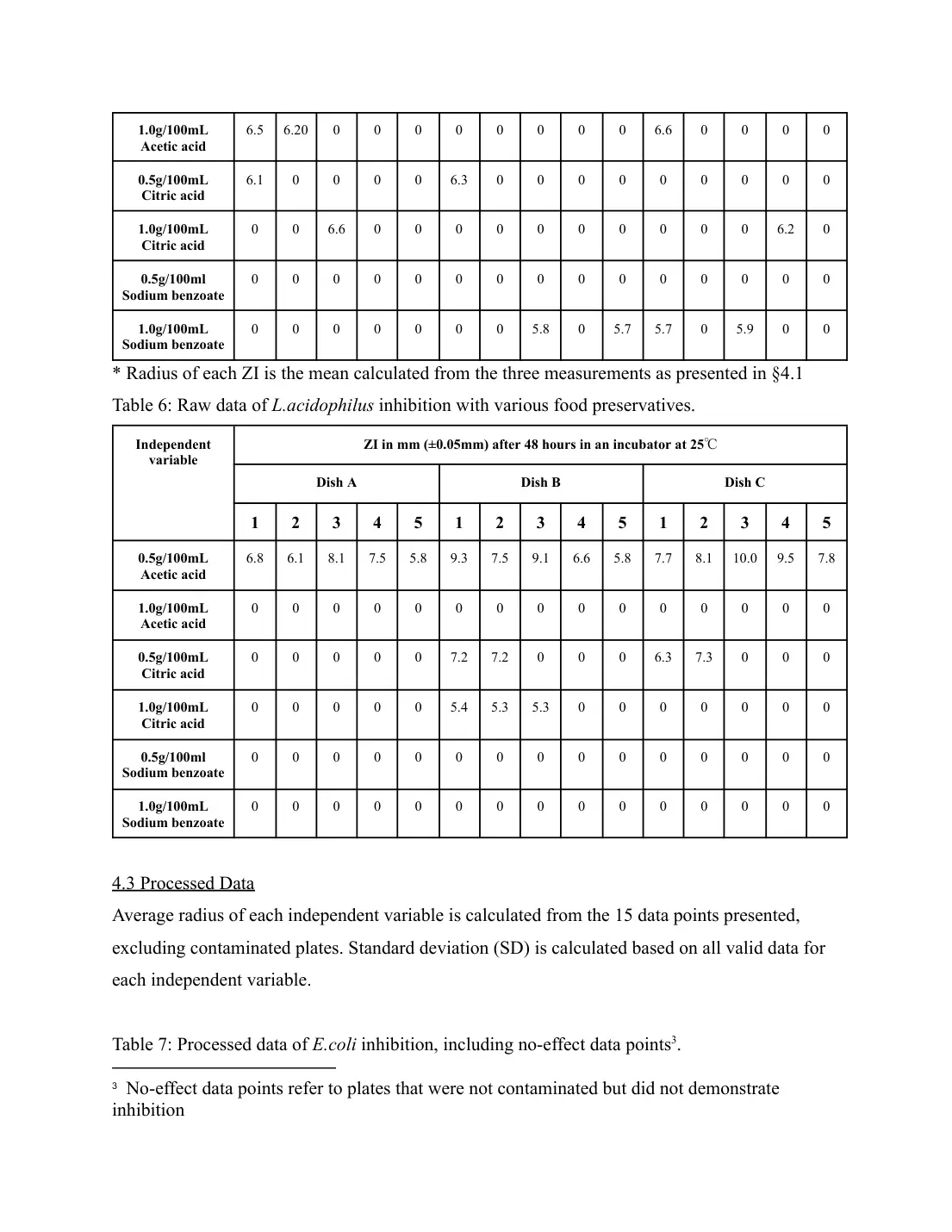
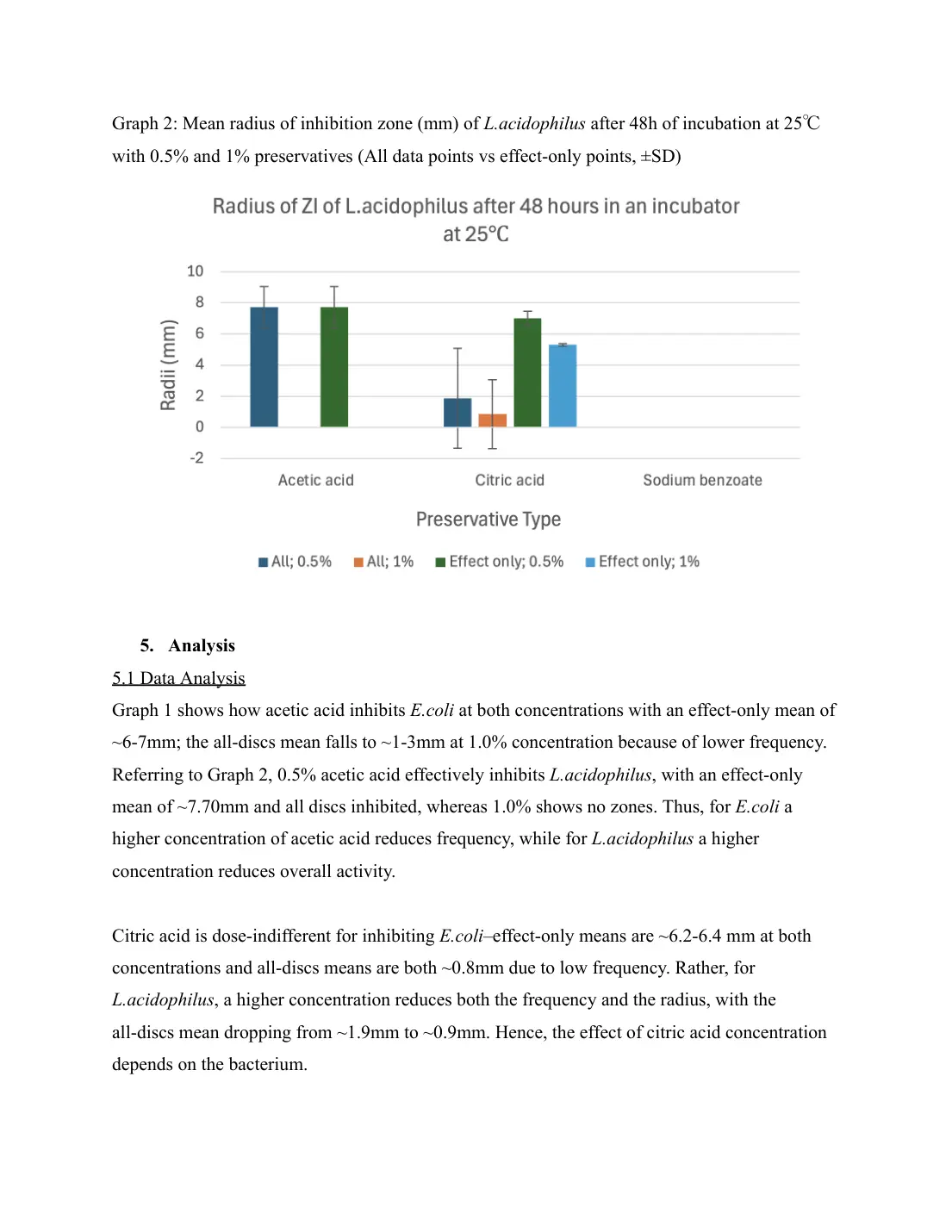
Explain the flip before explaining the biology. 0.5% acetic acid inhibited L. acidophilus on all 15 discs; 1.0% on none. Your explanation cites a paper on E. coli O157:H7. What else could reverse a result that cleanly: pH, or a mix-up in the solutions?
- Data analysis · to keep 6 safely
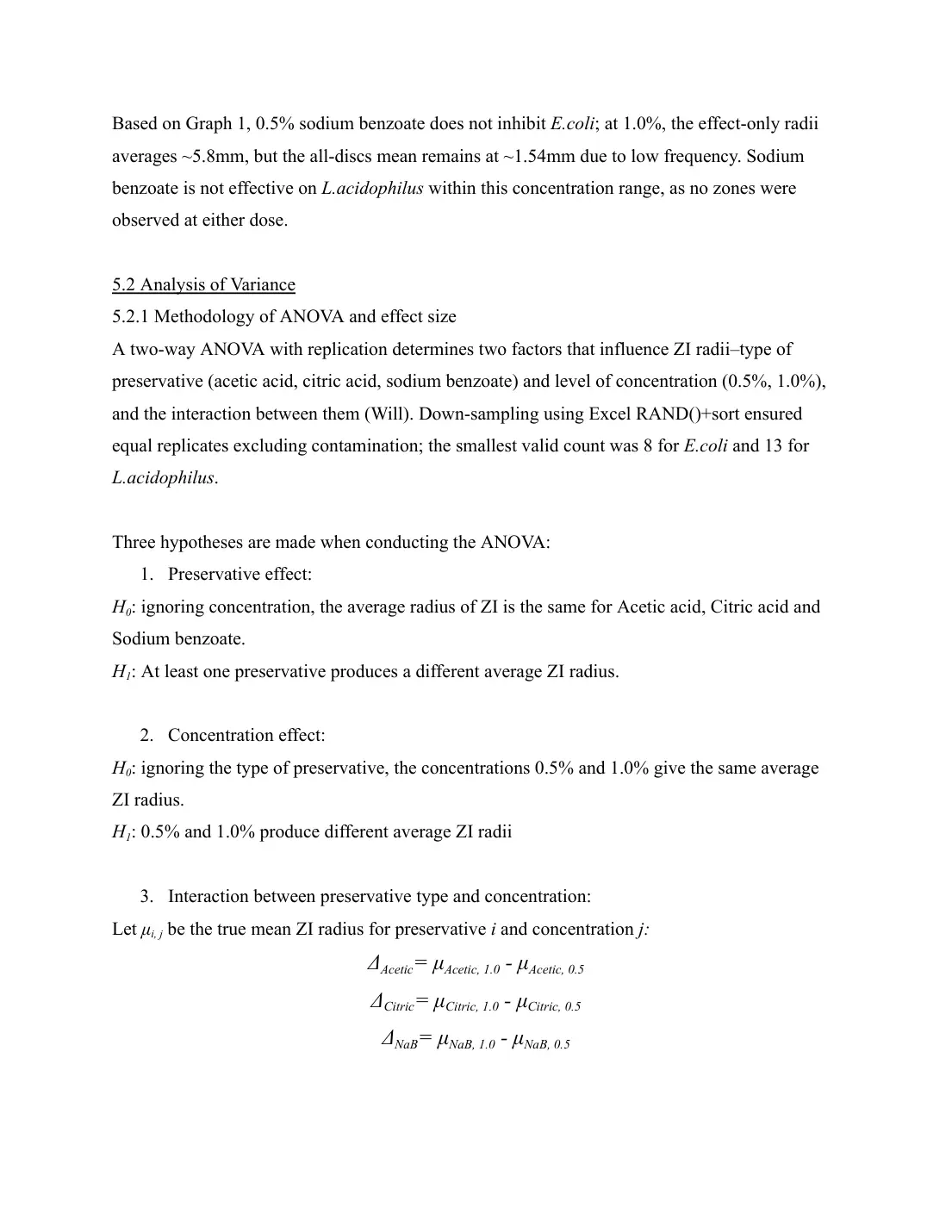
Your interaction is significant, but which pairs differ? A post-hoc test would back your per-preservative claims.
Page 19 of 25
- Conclusion · to reach 4
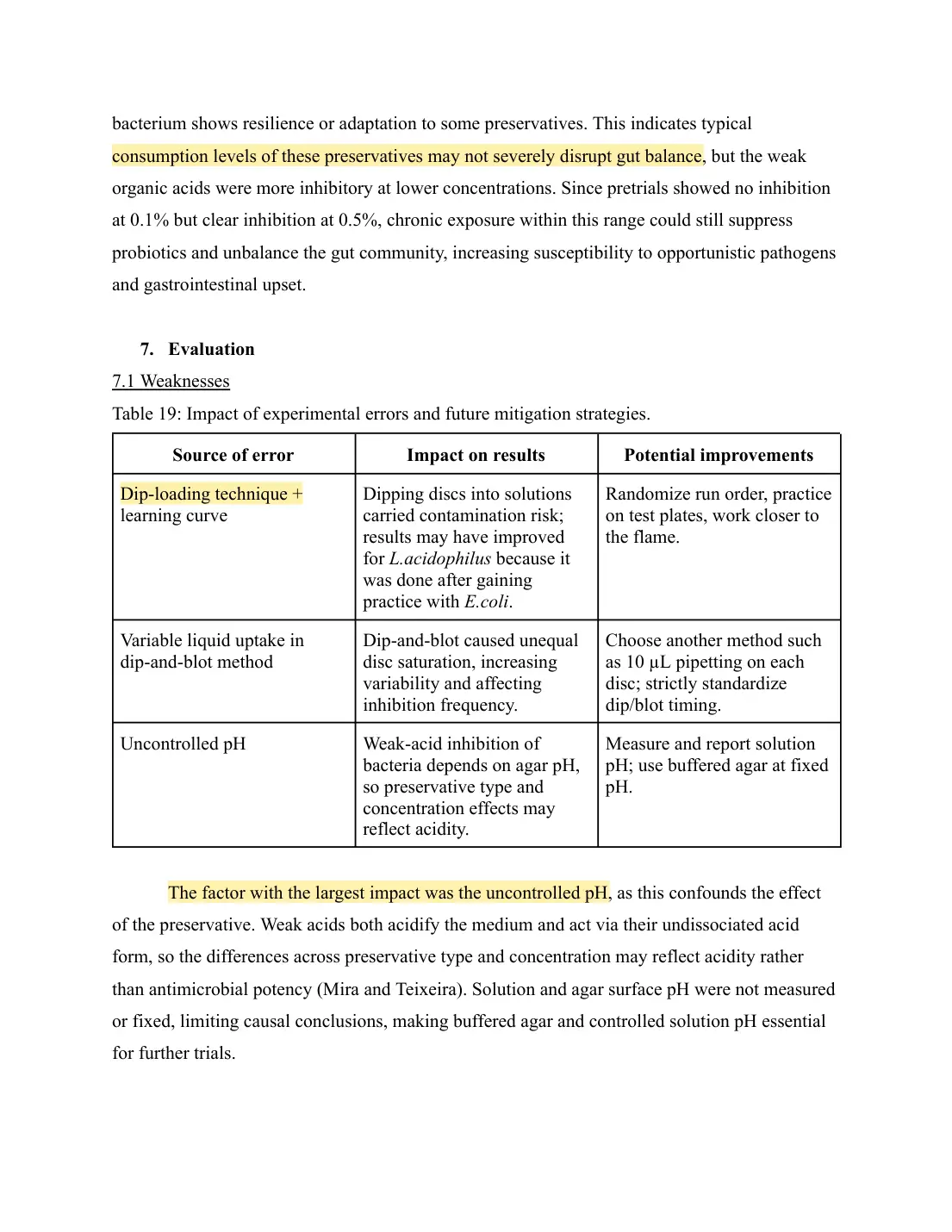
“Typical consumption may not disrupt gut balance”: your plates were agar at 25 °C, not a gut. What can they tell you?
- Evaluation · to reach 4
The learning-curve row is human error, which earns nothing, and “work closer to the flame” fixes technique, not method.
- Evaluation · keep doing this
You named uncontrolled pH as the biggest weakness and said why: weak acids act in their undissociated form.
Page 20 of 25
- Do these three corrections first · number 3
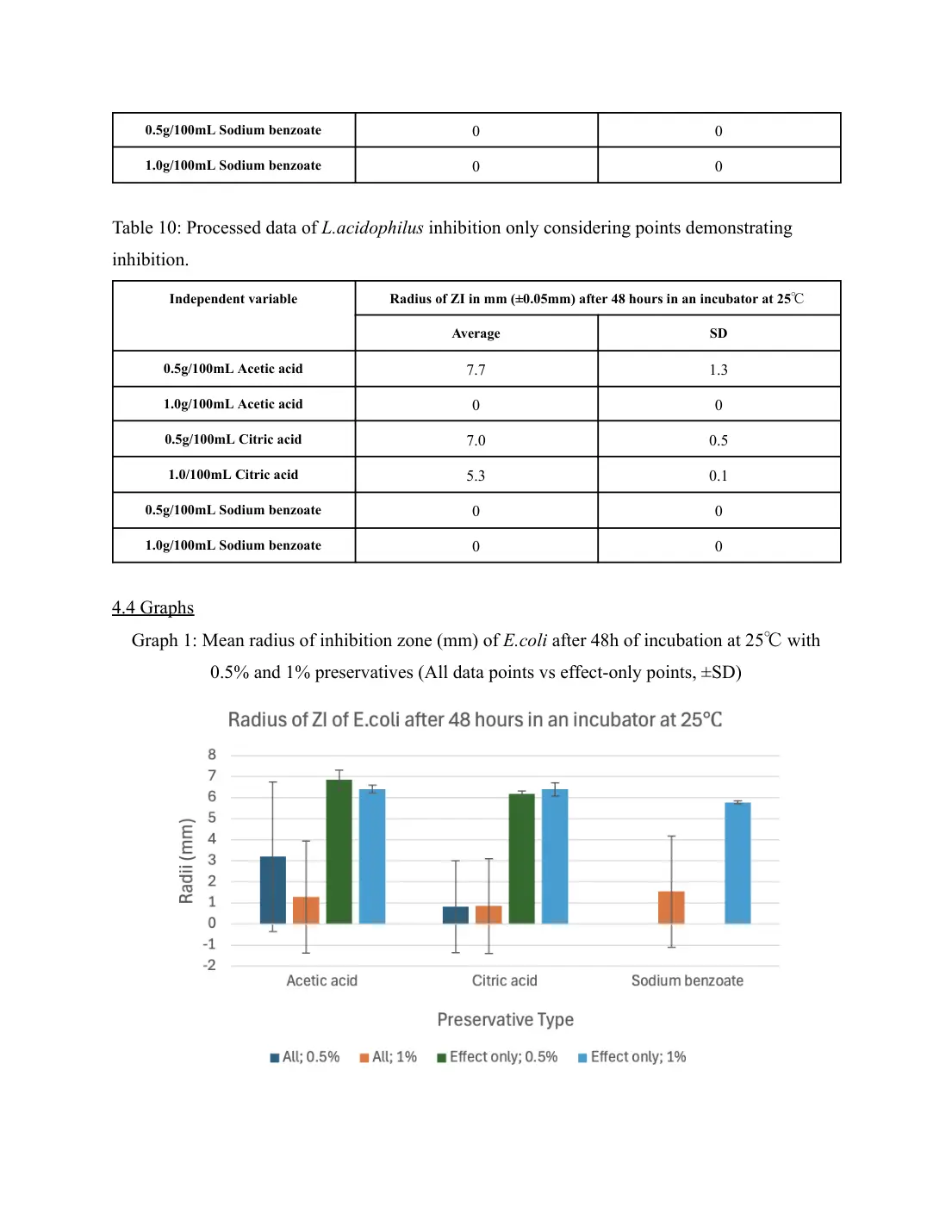
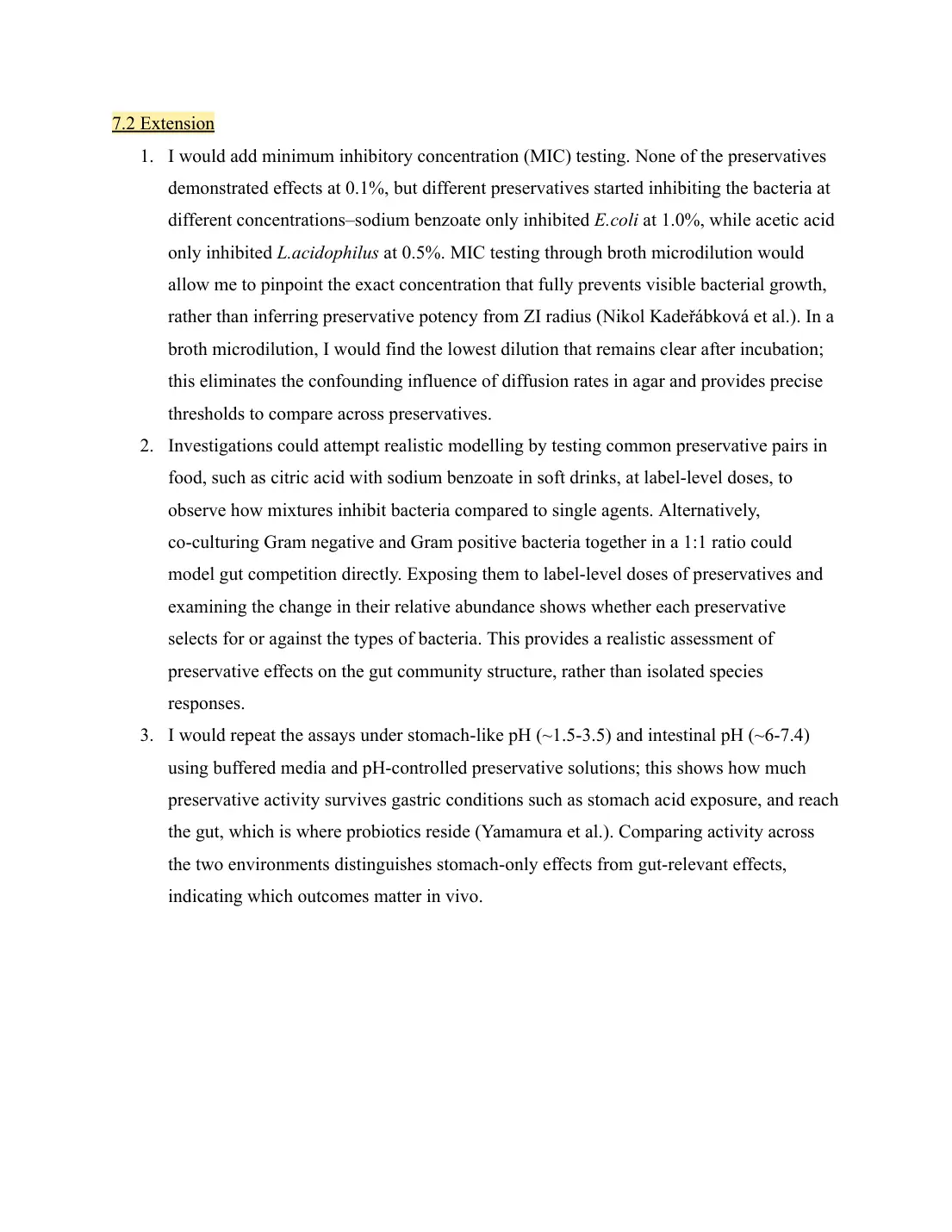
Swap your extensions for evidence. Section 7.2 is three extensions, about 300 words that earn nothing. Use them to show, from your own tables, which weakness mattered most. What does an SD of 3.5 mm on a mean of 3.2 mm say about disc loading?
Pages 21 to 25: no notes show
Page 21 of 25
Page 22 of 25
Page 23 of 25
Page 24 of 25
Page 25 of 25

Get yours back annotated
Mark a draft, then press Annotated draft (PDF) under the sheet. Your first draft is free.
Mark a draft →