 Biology by Bradford
Example A · 17 · Example B · 14 vs 13 · Example C · 13
Example A · a real HL script, names removed
The annotated script.
Preservatives and E. coli (HL)“To what extent do the food preservatives acetic acid, sodium benzoate and citric acid at 0.5 g/100 mL and 1 g/100 mL affect the growth of E. coli and L. acidophilus as measured by the radius of the zone of inhibition (mm)?”
- Mark17/24RD 5 · DA 6 · C 3 · E 3
- Second markerAgrees with the mark.
- Notes22 comments, pinned where the evidence is.
- HowTap a number on a page to read its note, or a note to find it on the page.
Page 1 of 25
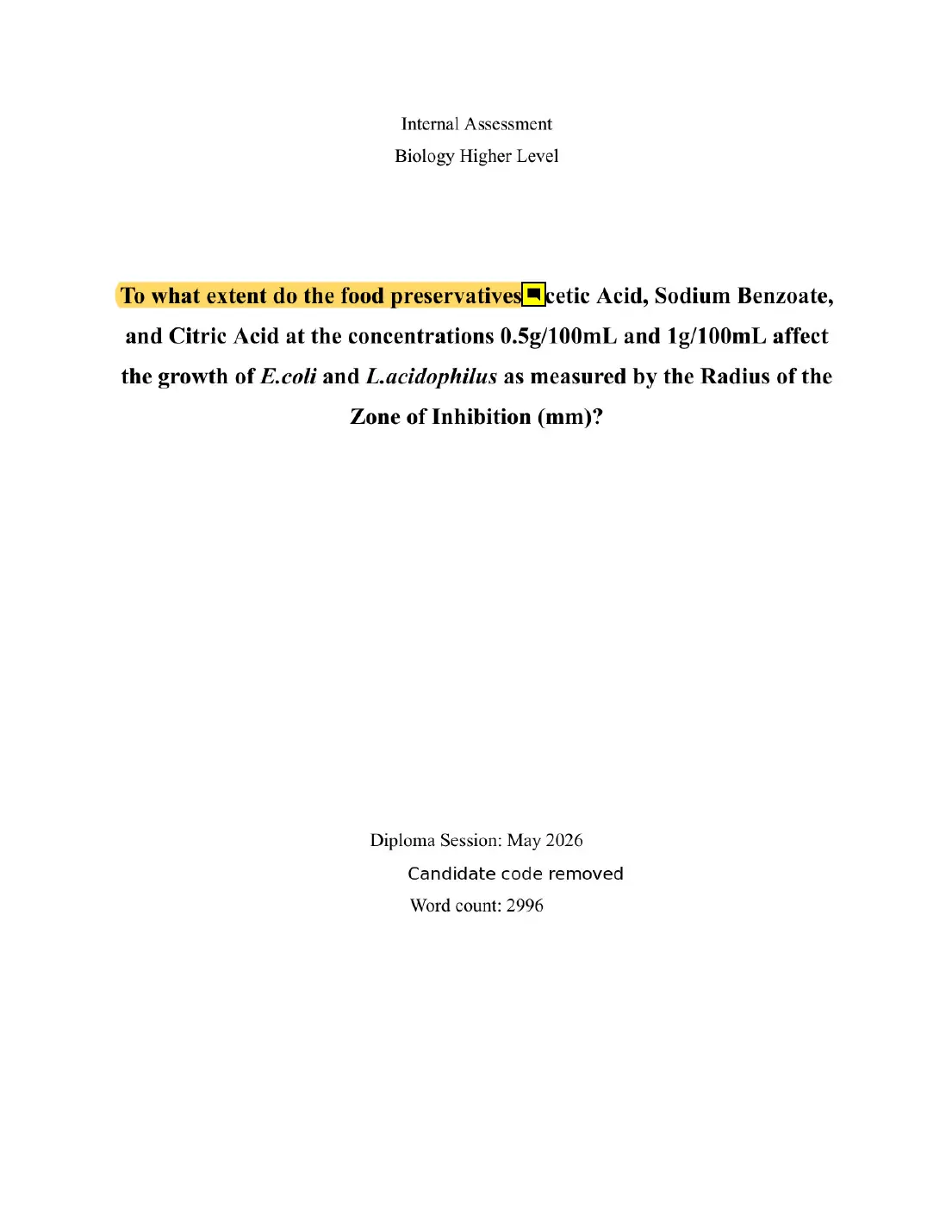
- Research design · first strand
Focused question with both concentrations and the measurement of the dependent variable. The organisms are abbreviated and no binomial or strain is given here.
Page 2 of 25
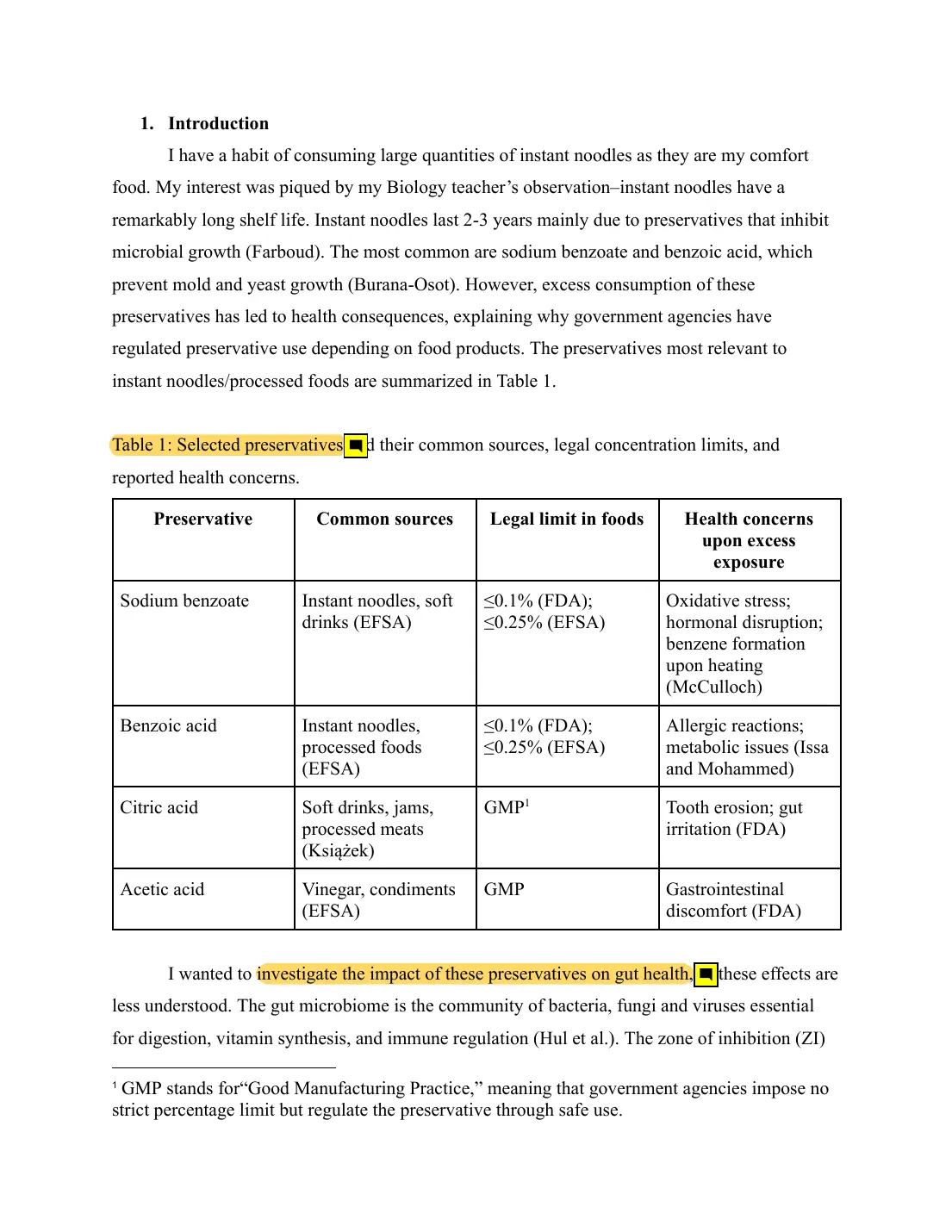
- Research design · first strand
Relevant background is tabled with sources, linking each preservative to its use in food. The legal limits (up to 0.1% to 0.25%) sit well below the 0.5% and 1% tested, which matters when the conclusion turns back to real food.
- Research design · first strand
A clear reason for the focus on gut bacteria, which links the context to the choice of E. coli and L. acidophilus.
Page 3 of 25
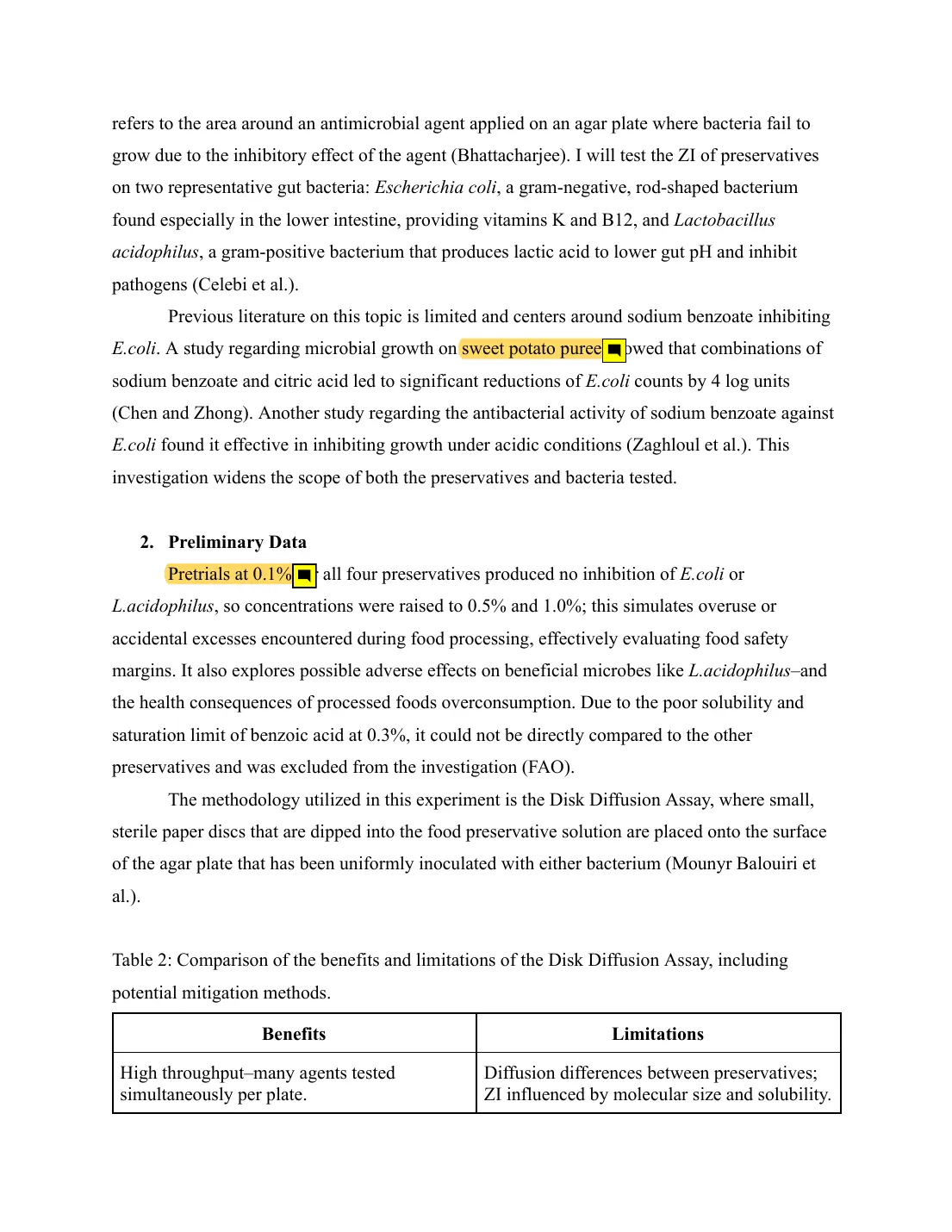
- Research design · first strand/conclusion, second strand
The cited Chen and Zhong paper concerns broth and cherry tomatoes. These published findings are not returned to in the conclusion.
- Research design · second strand
The range of the independent variable is justified by pilot data.
Page 4 of 25
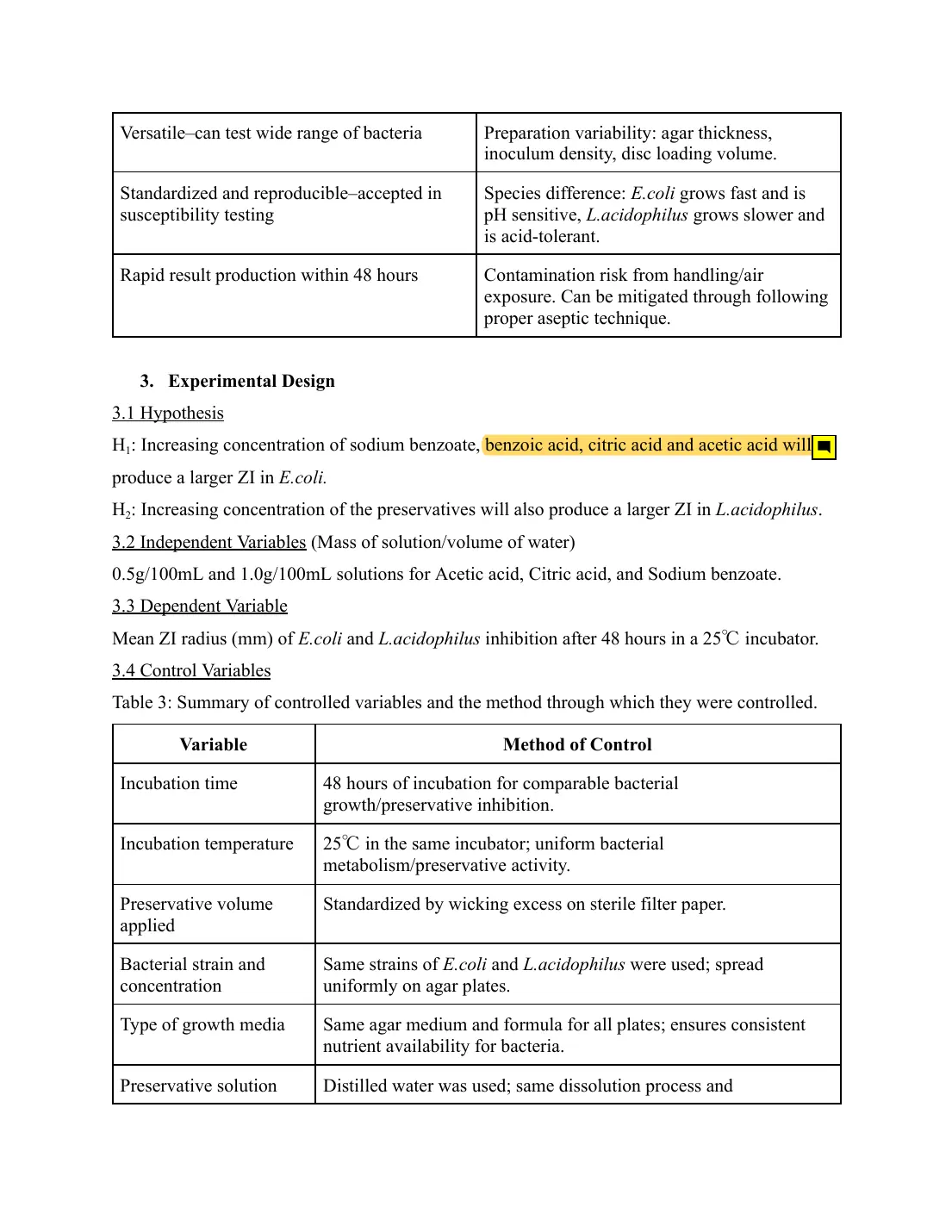
- Research design · first strand
The hypotheses still include benzoic acid, which was excluded in section 2.
Page 5 of 25
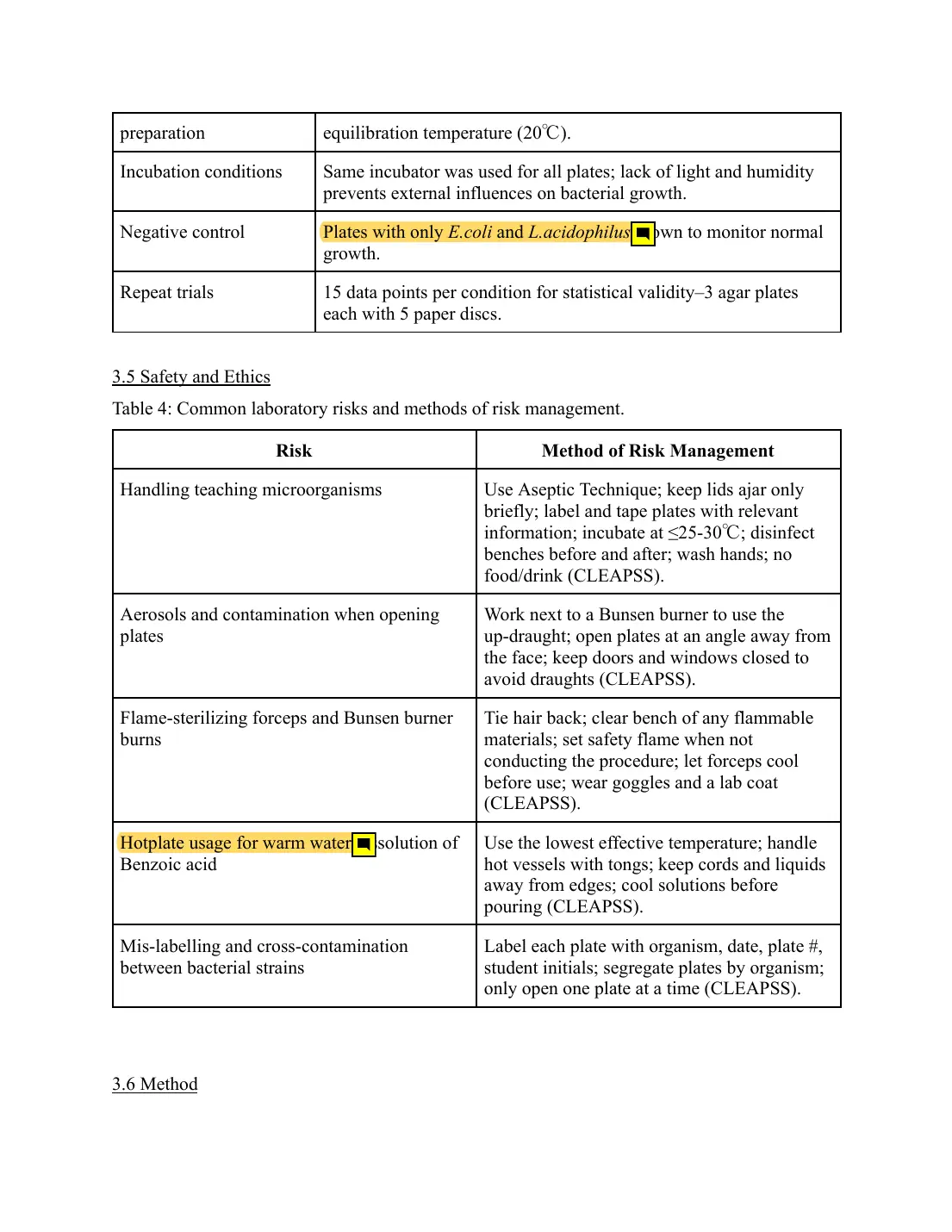
- Research design · second strand
A no-disc control is used. There is no disc loaded with distilled water alone.
- Research design · second strand
Risk assessment is tabled and sourced, but this row refers to a reagent dropped from the investigation and disposal of cultures is not addressed.
Page 6 of 25
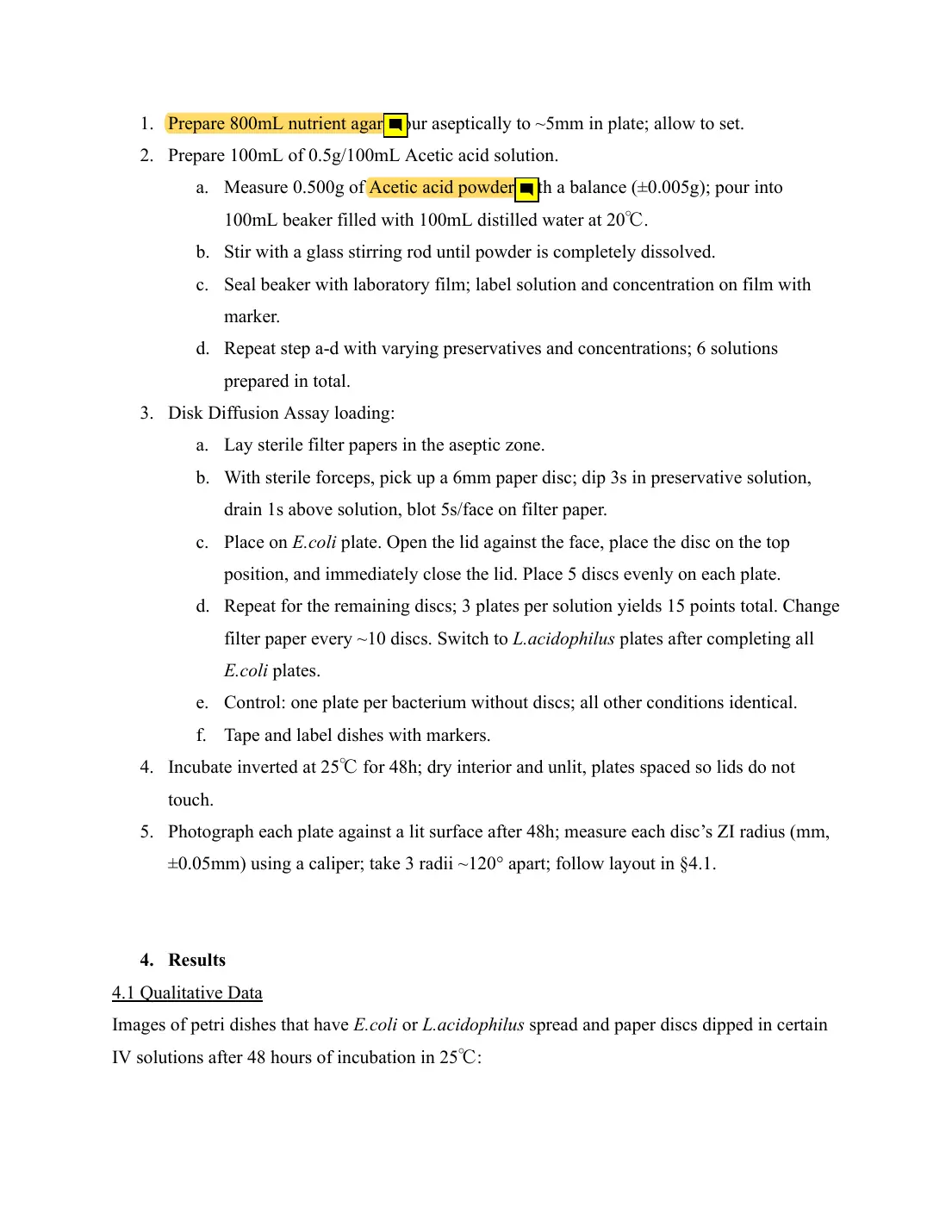
- Research design · third strand
How were the plates inoculated? Volume, culture density and spreading method are not given.
- Research design · third strand
Acetic acid is a liquid at 20 °C. It is not clear what was weighed.
Page 7 of 25
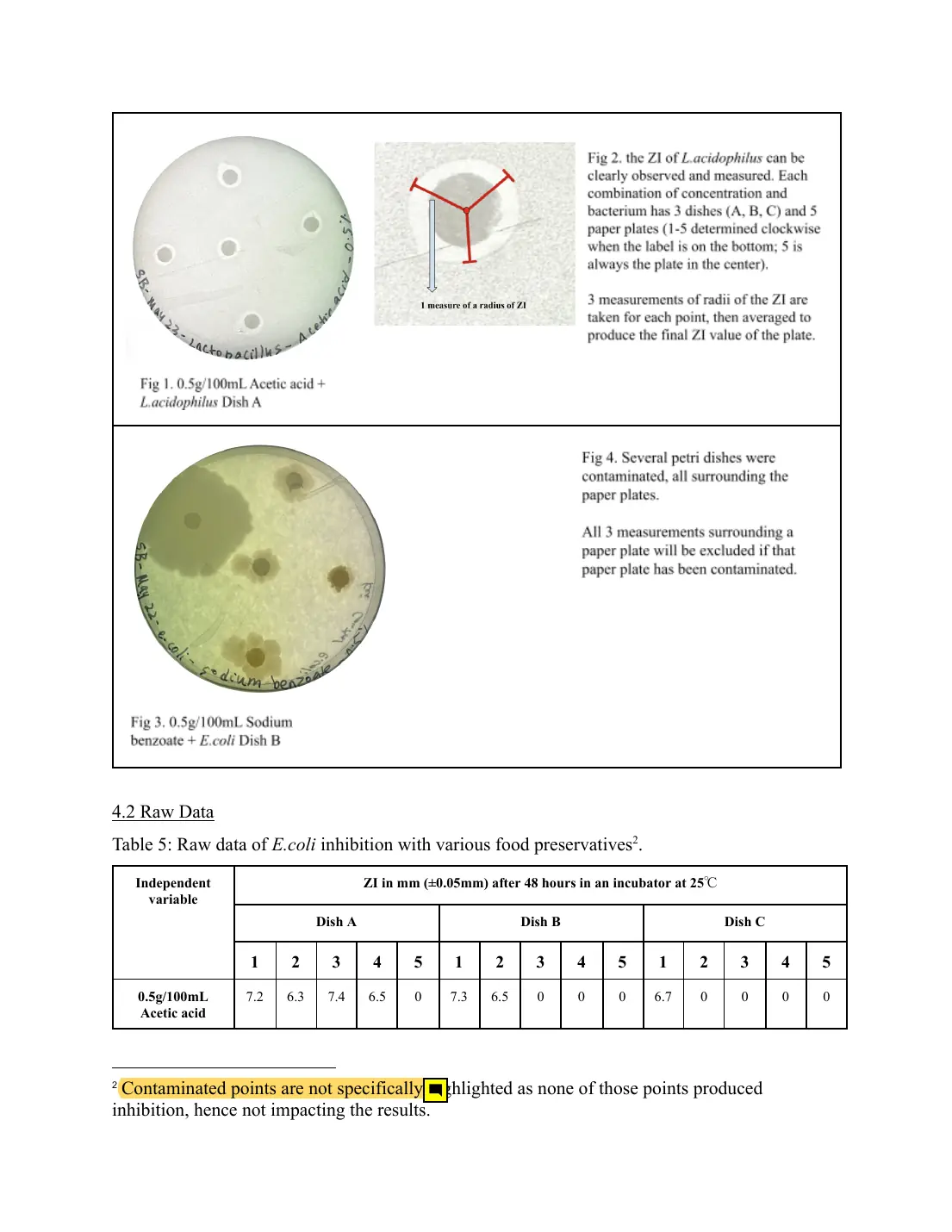
- Data analysis · first strand
Contaminated discs are not identified in Tables 5 and 6, so the valid n for each condition cannot be checked.
Page 8 of 25
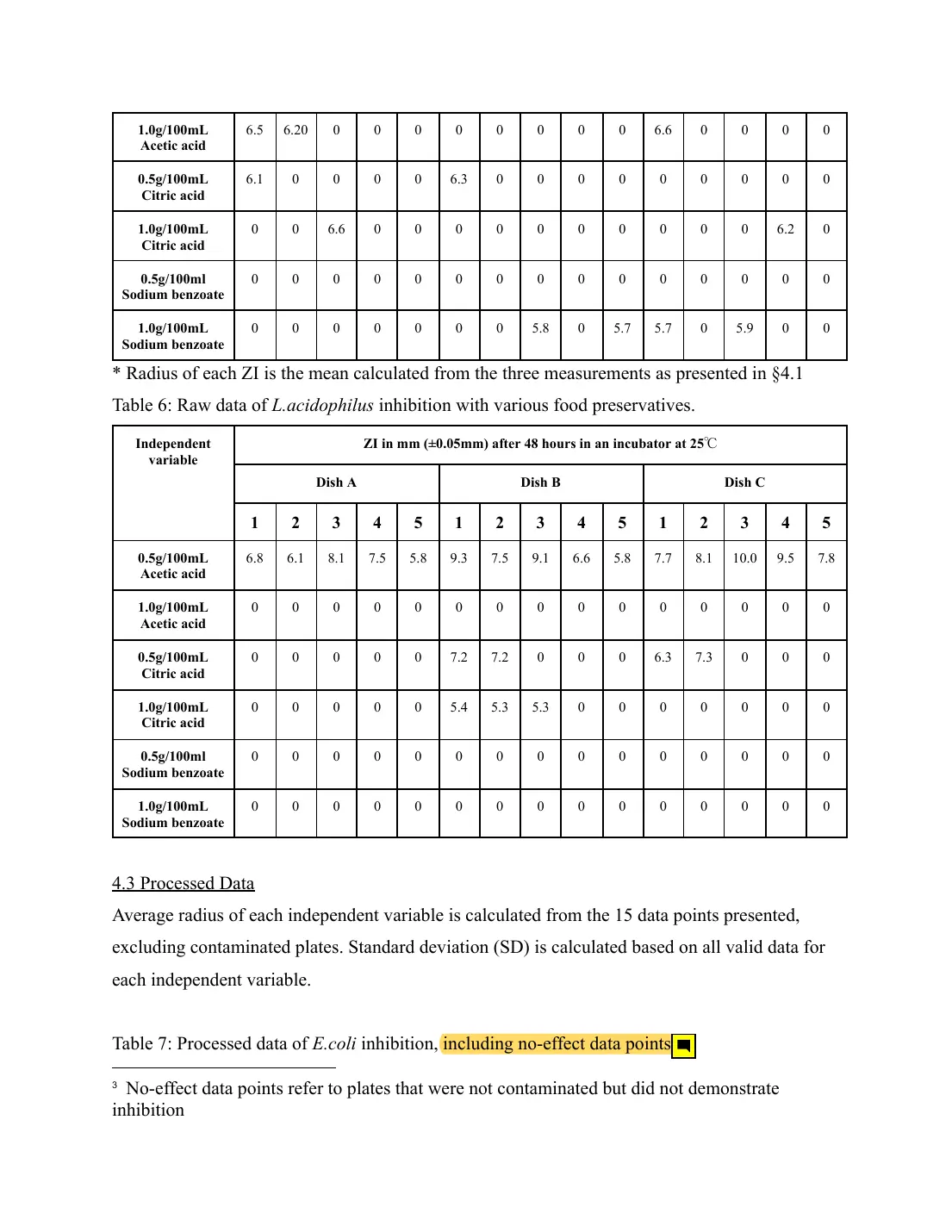
- Data analysis · third strand
Separating all-disc and effect-only means keeps frequency of inhibition apart from its size. A good point.
Page 9 of 25
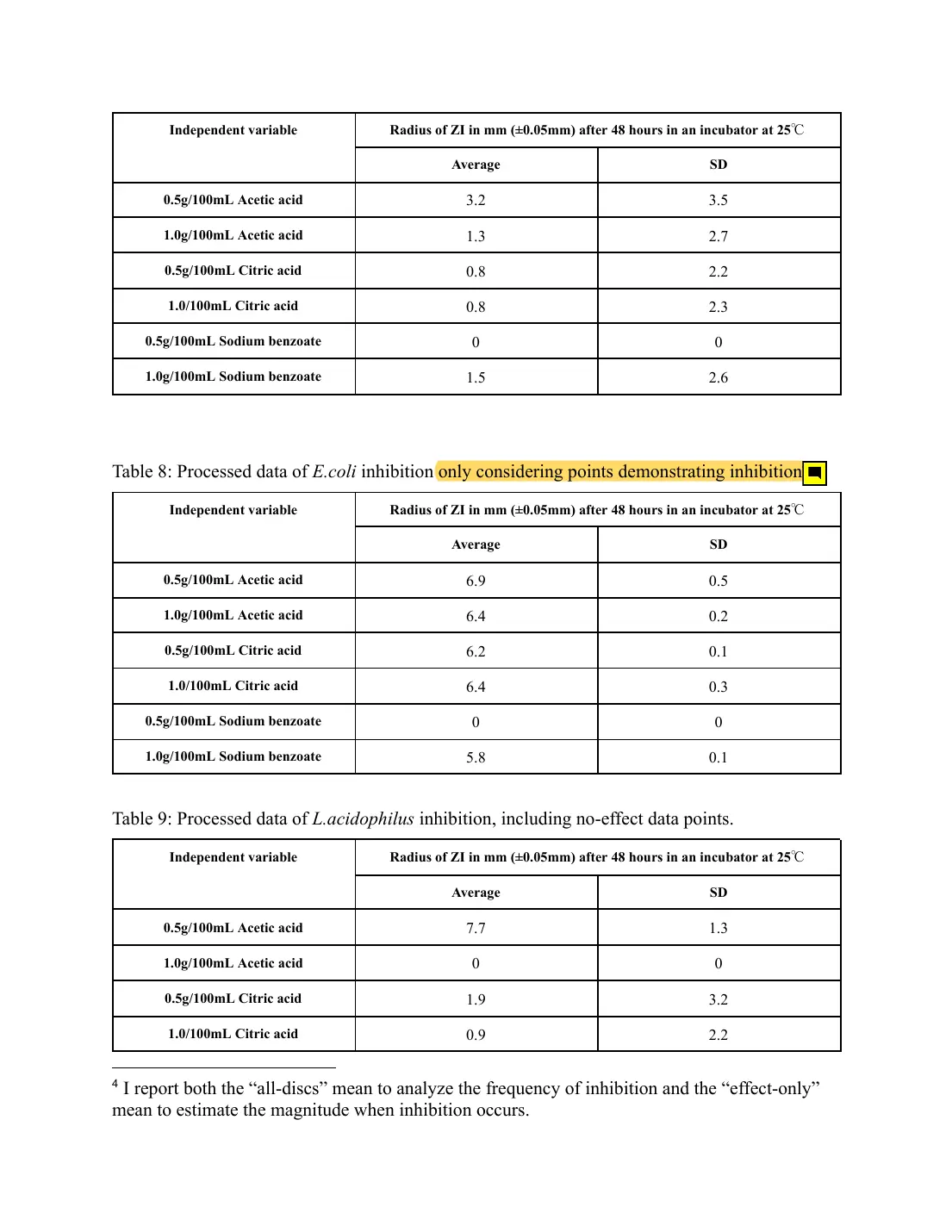
- Data analysis · third strand
Several of these SDs are calculated from two or three values.
Pages 10 to 11: no comments show
Page 10 of 25
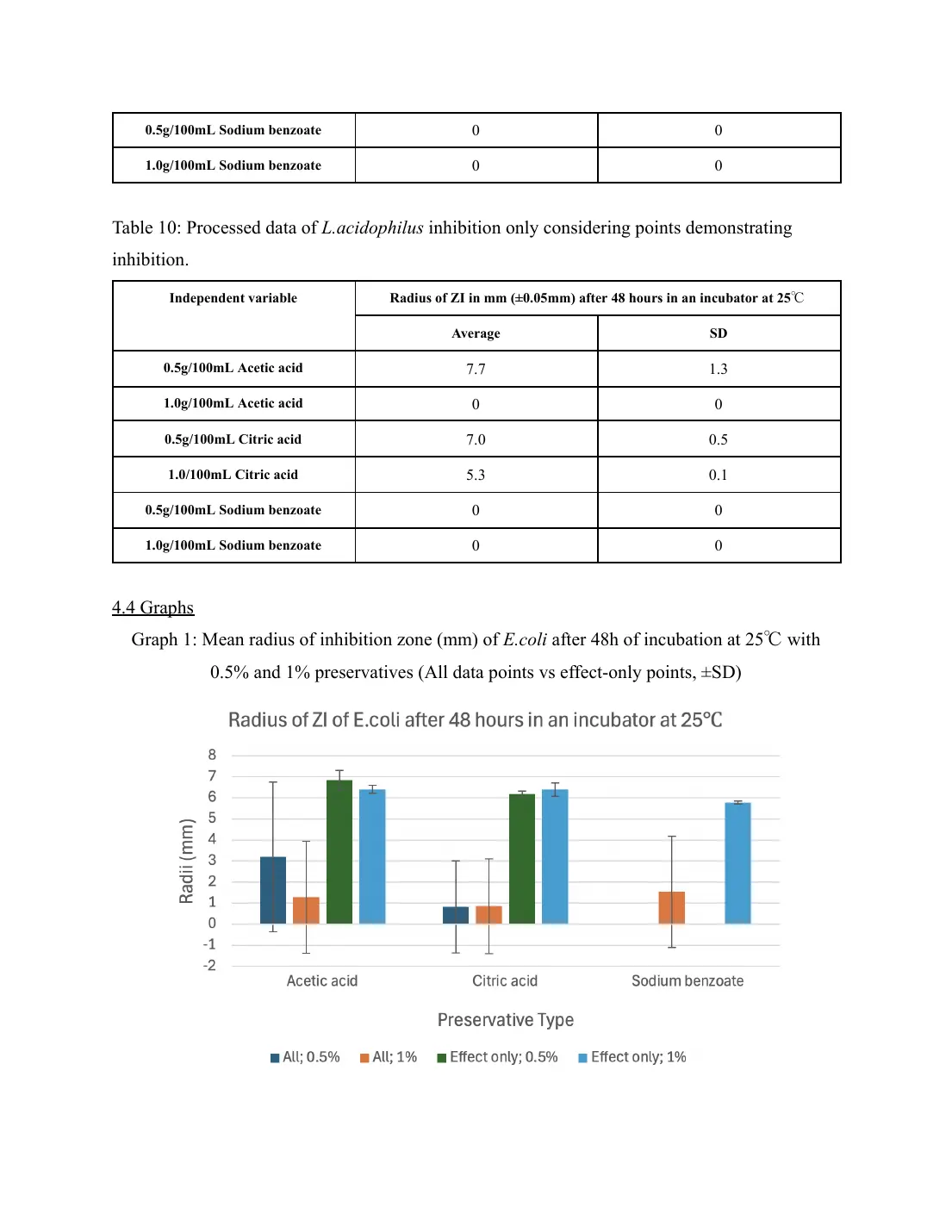
Page 11 of 25
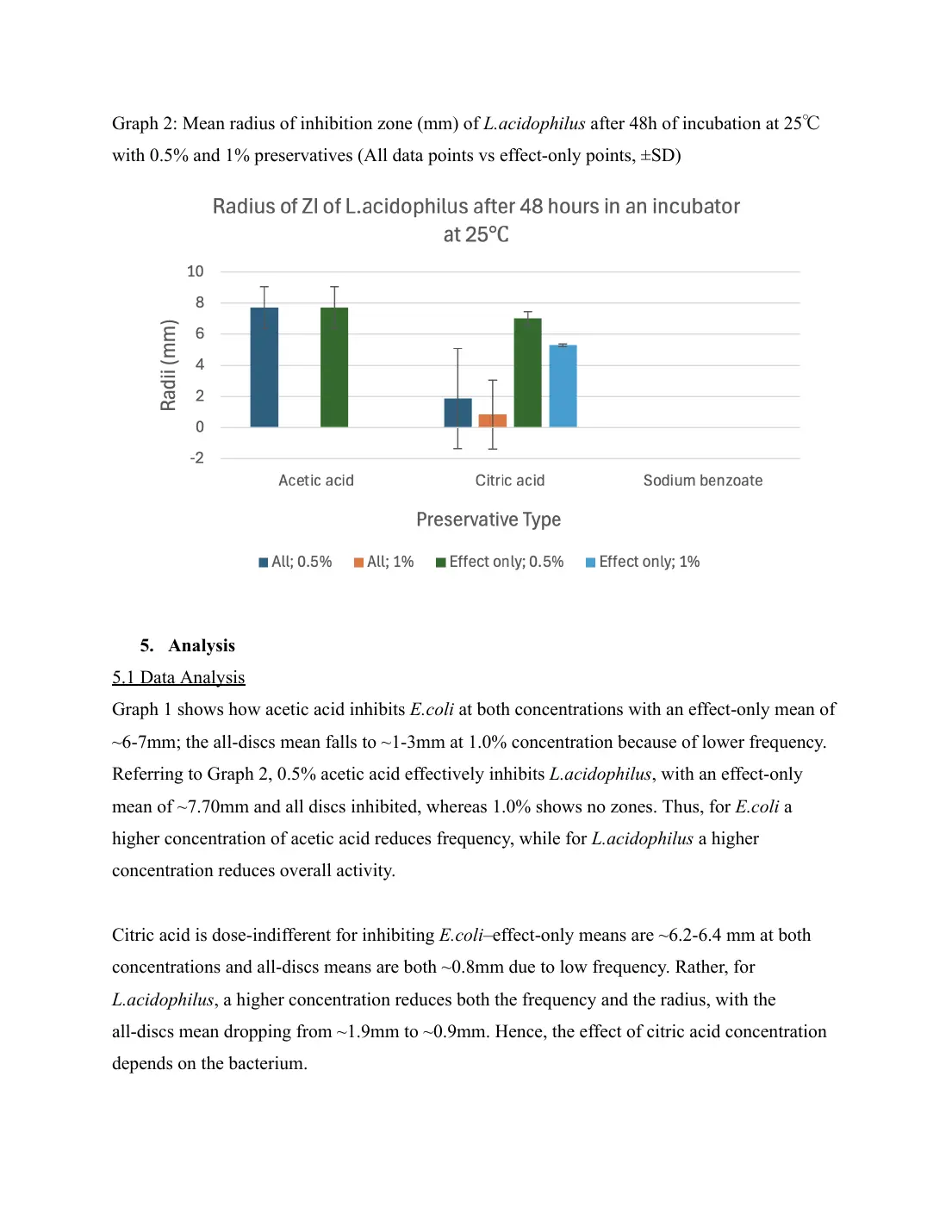
Page 12 of 25
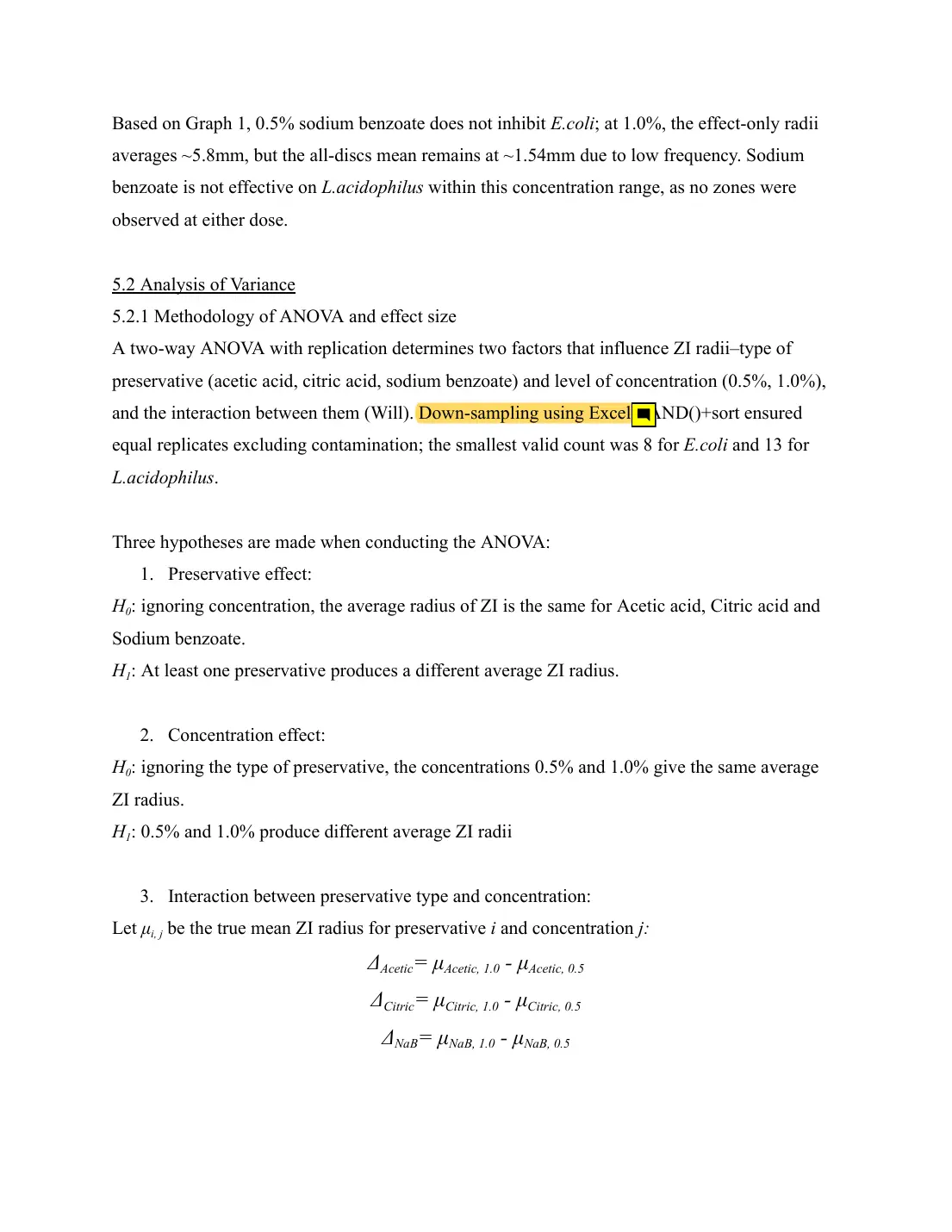
- Data analysis · third strand
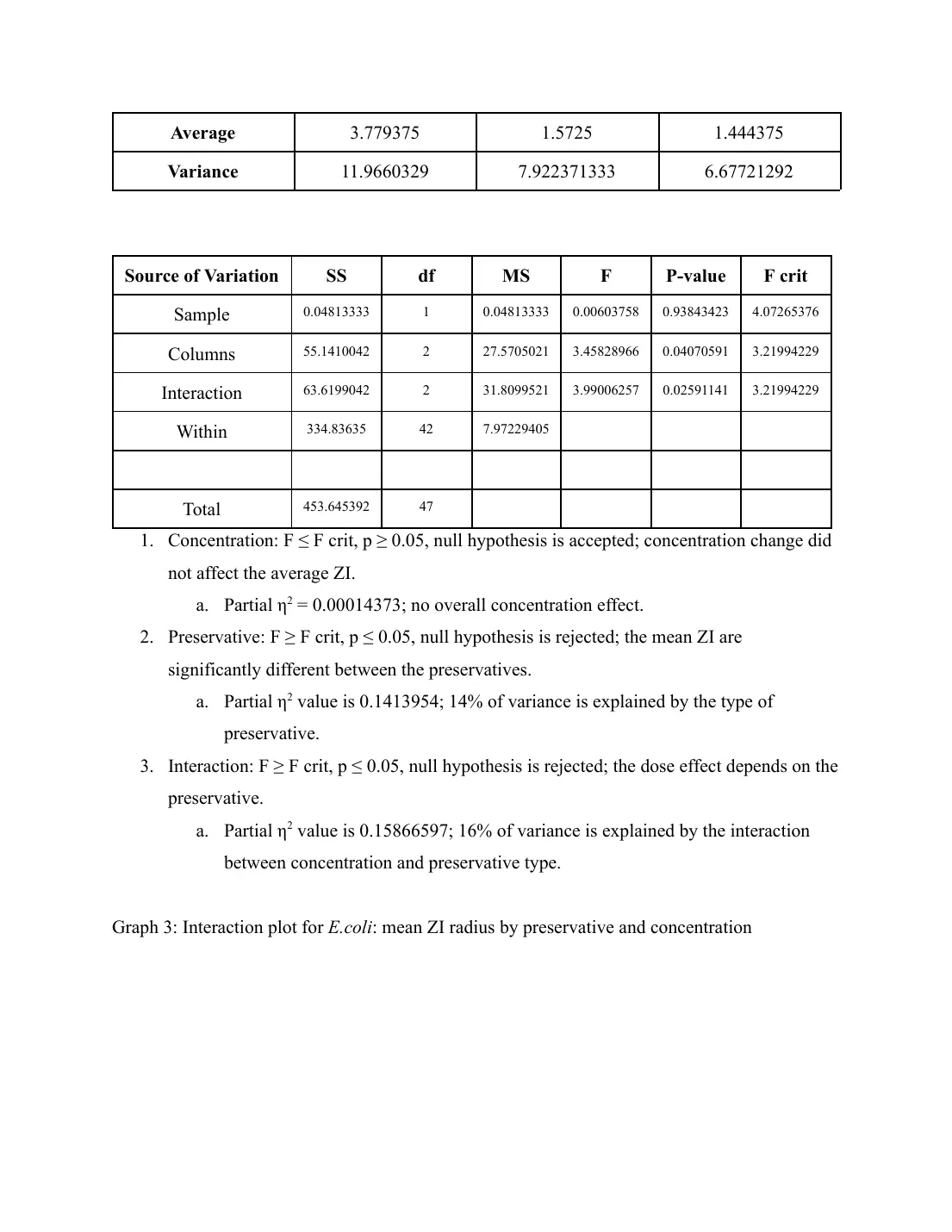
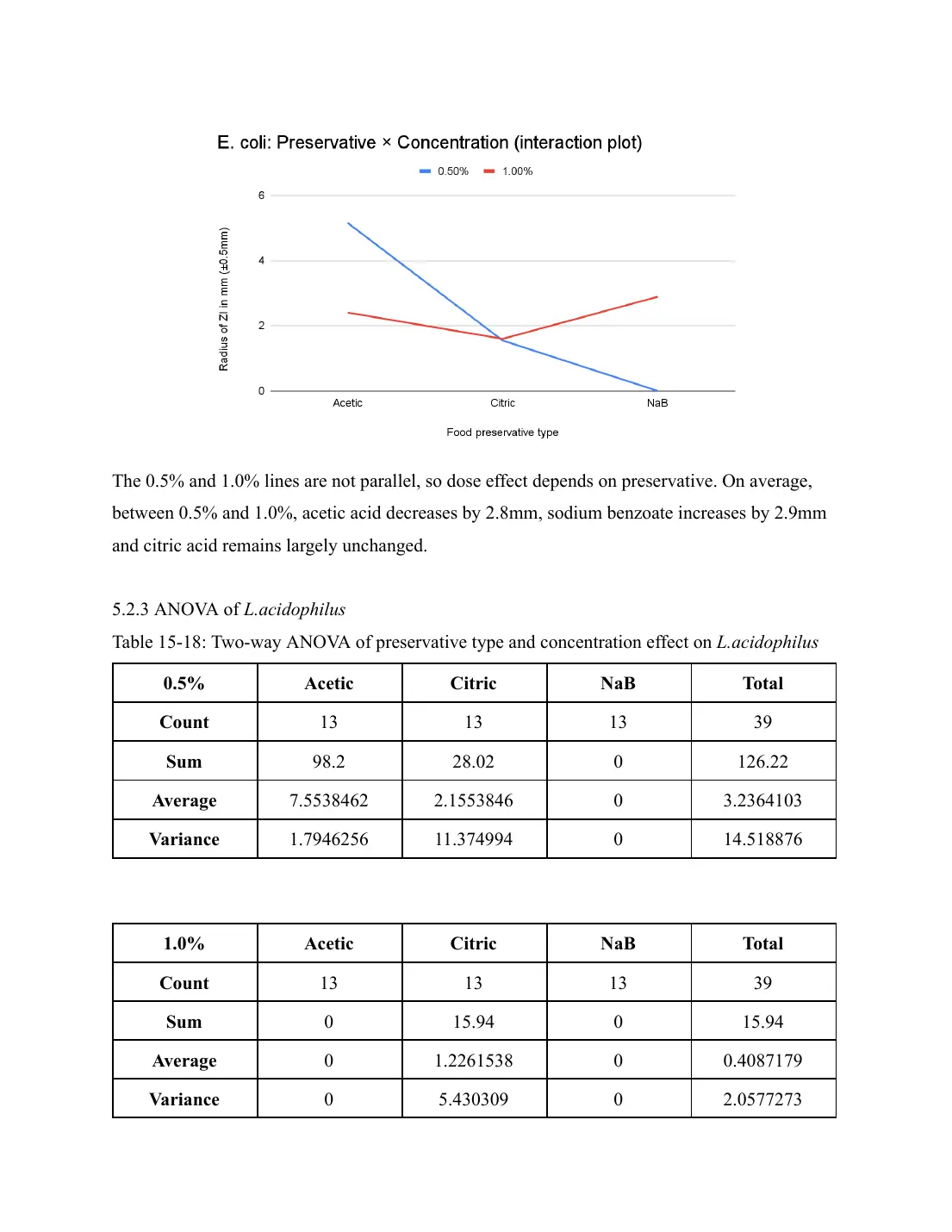
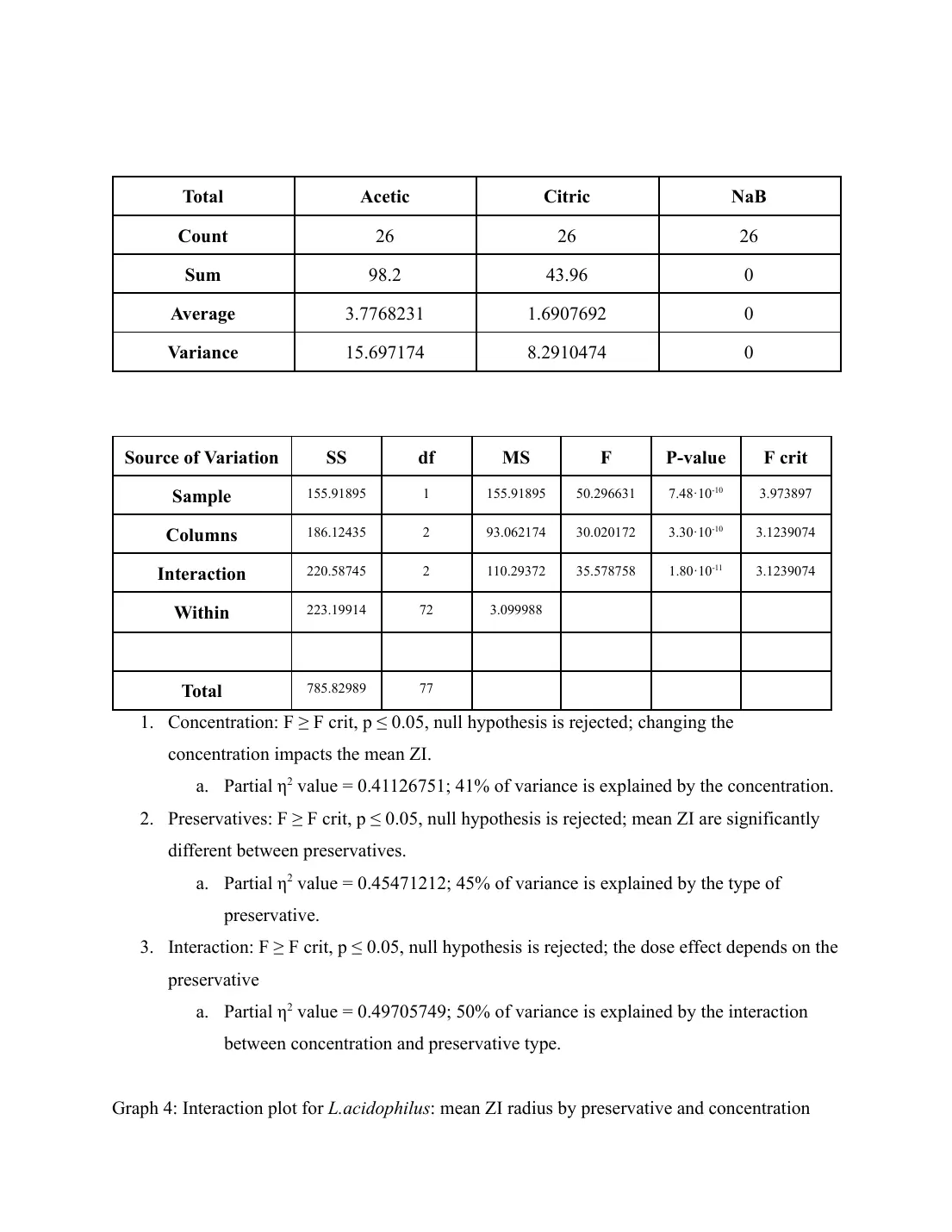
Valid readings are discarded at random to equalise n. Many cells contain only zeros, which strains the ANOVA assumptions.
Page 13 of 25
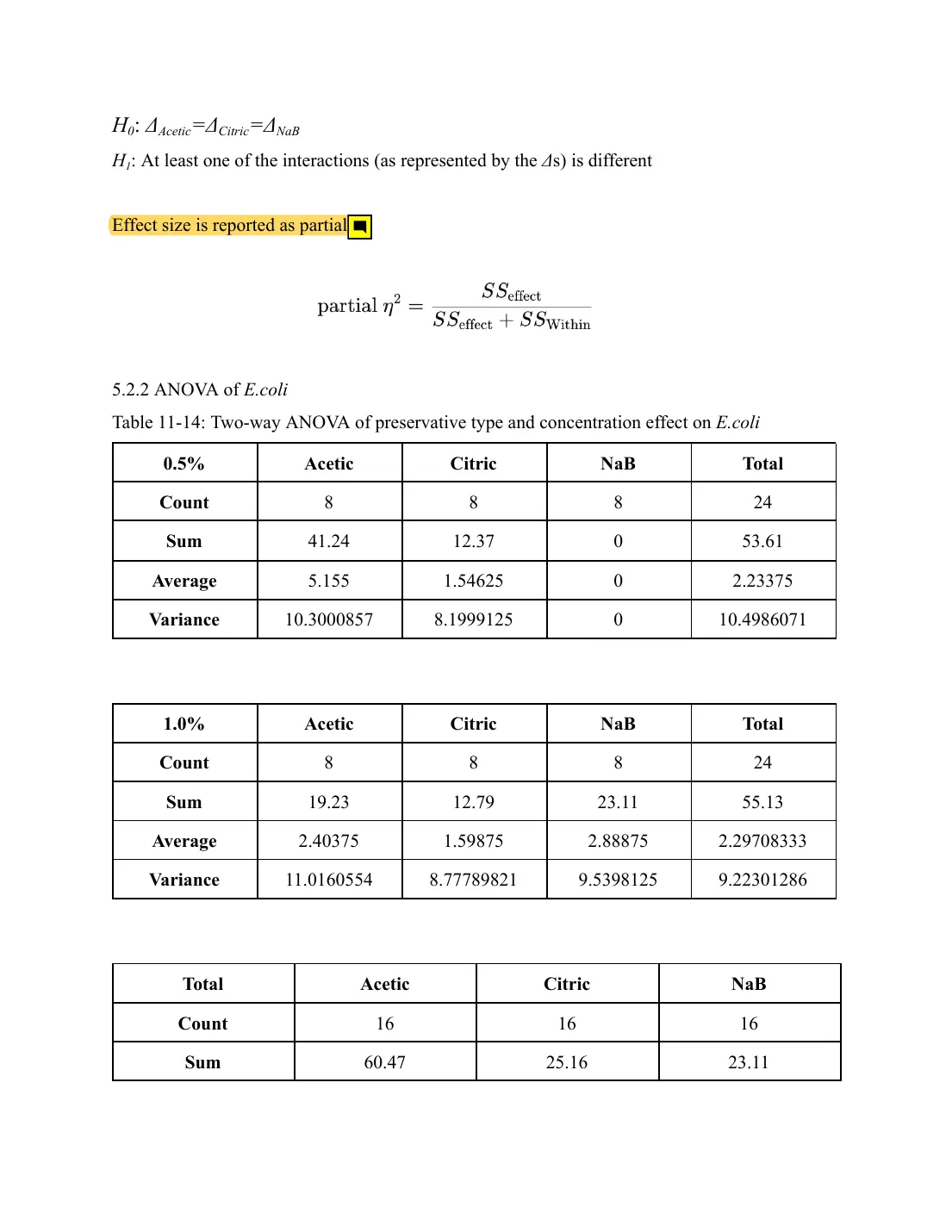
- Data analysis · third strand
Hypotheses are stated for all three tests and effect sizes are given. No post-hoc test follows the significant results.
Pages 14 to 16: no comments show
Page 14 of 25
Page 15 of 25
Page 16 of 25
Page 17 of 25
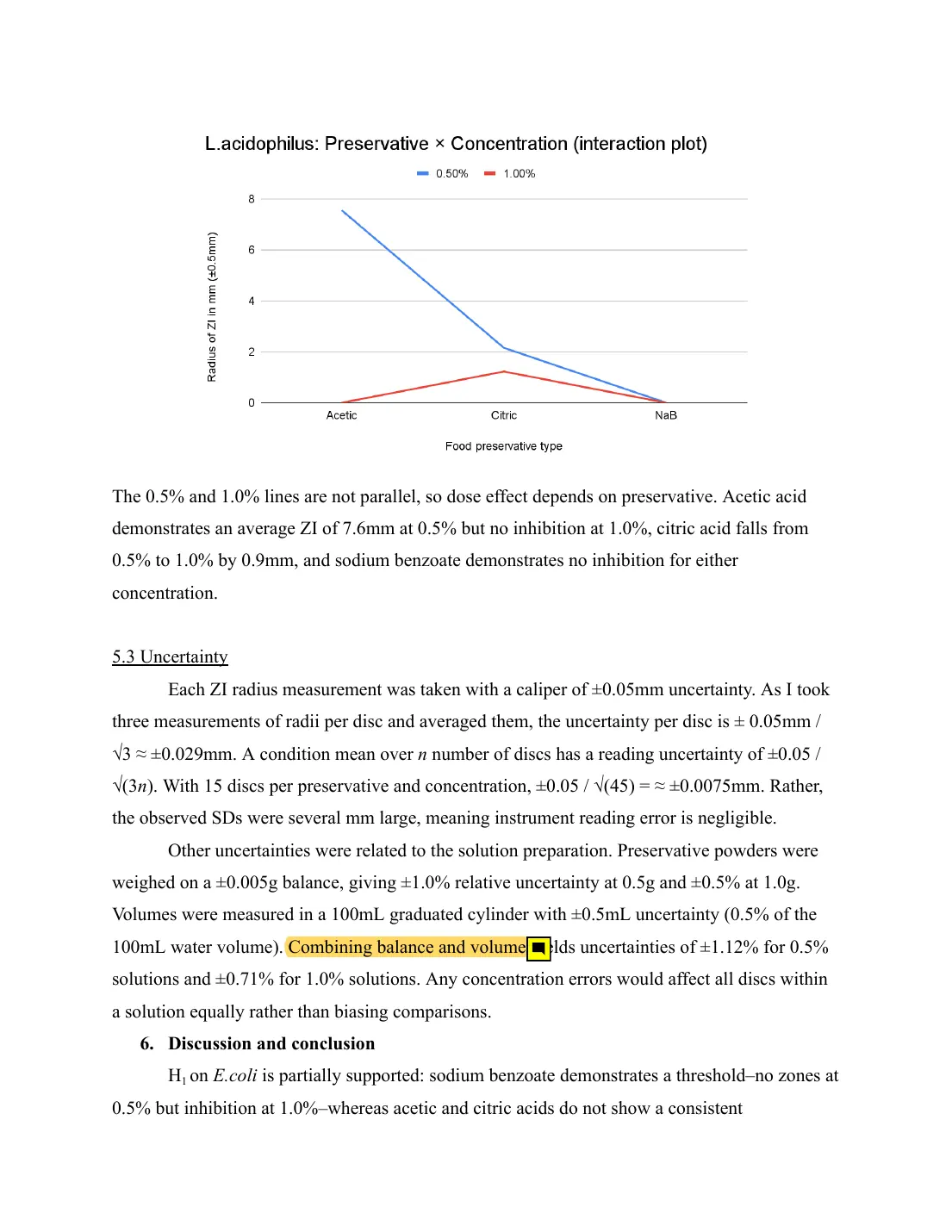
- Data analysis · second strand
Measurement uncertainties are quantified and correctly judged small beside the SDs.
Page 18 of 25
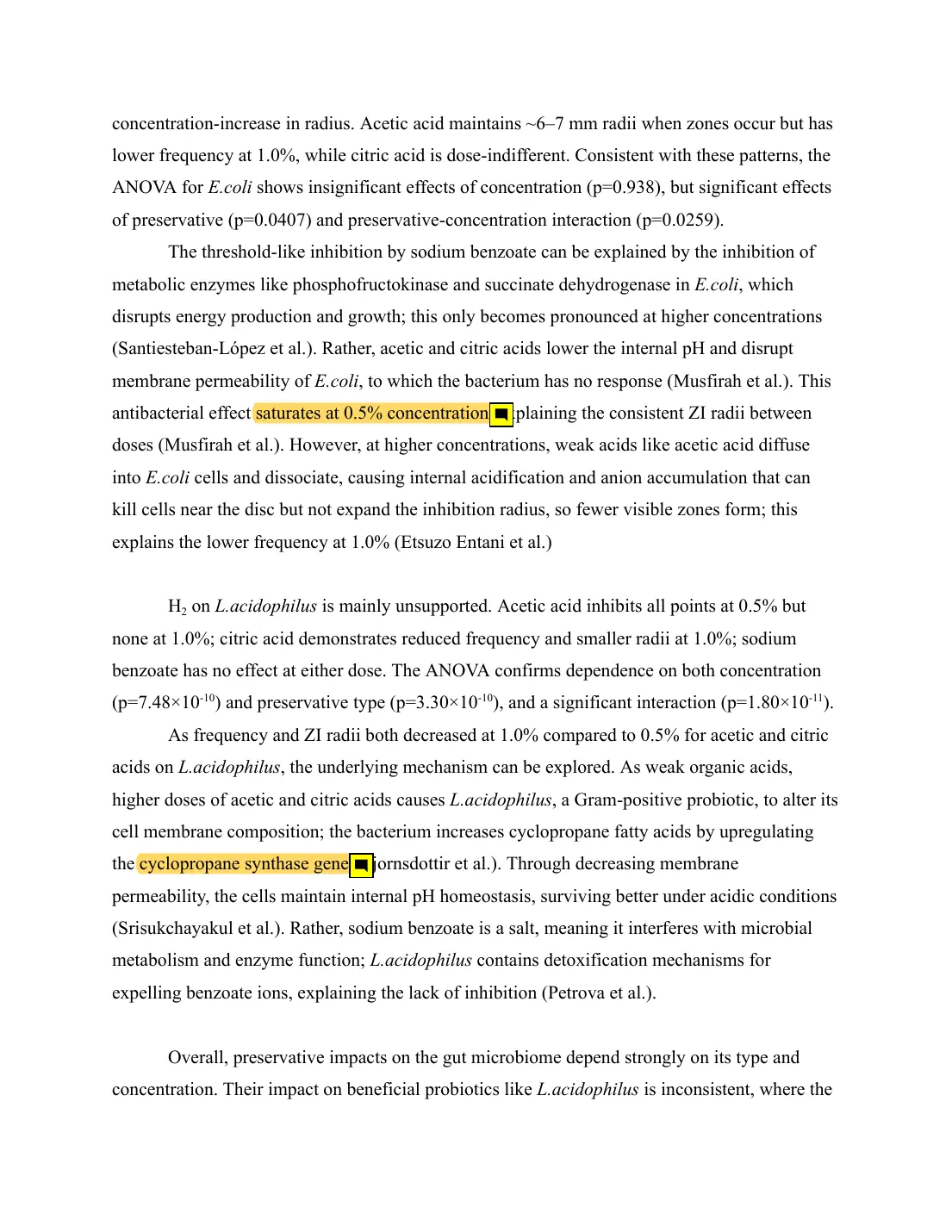
- Conclusion · second strand
Mechanism is explained with citations, but no zone size is compared with a published value.
- Conclusion · second strand
The Bjornsdottir paper concerns E. coli O157:H7, not L. acidophilus.
Page 19 of 25
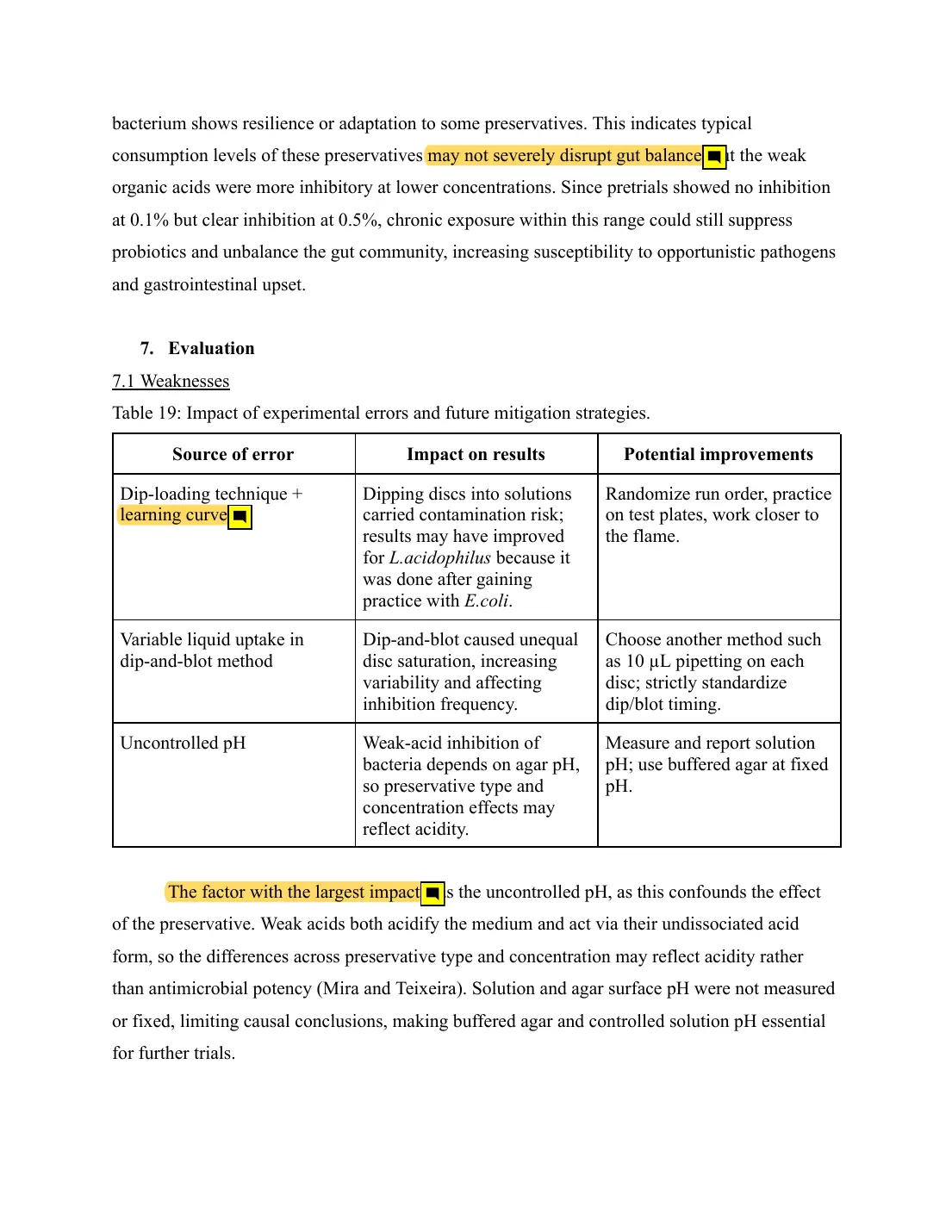
- Conclusion · first strand
A disc assay on agar does not support a claim about the human gut.
- Evaluation · first strand
Practice effect and handling are procedural matters.
- Evaluation · first strand
Relative impact is explained for uncontrolled pH, with a source. A positive point.
Page 20 of 25
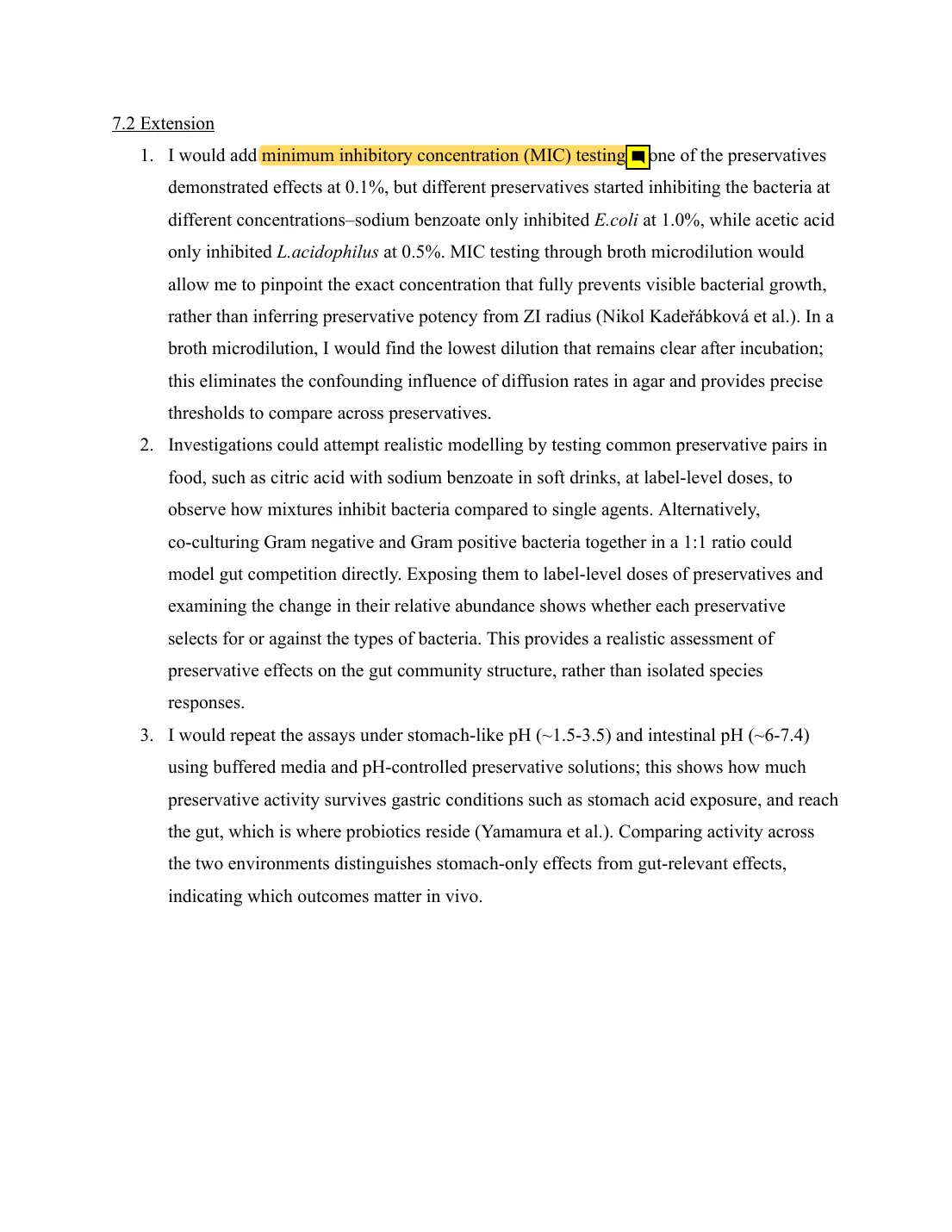
- Evaluation · second strand
Section 7.2 proposes extensions. These do not improve the investigation as carried out.
Pages 21 to 25: the references and appendix show
Page 21 of 25
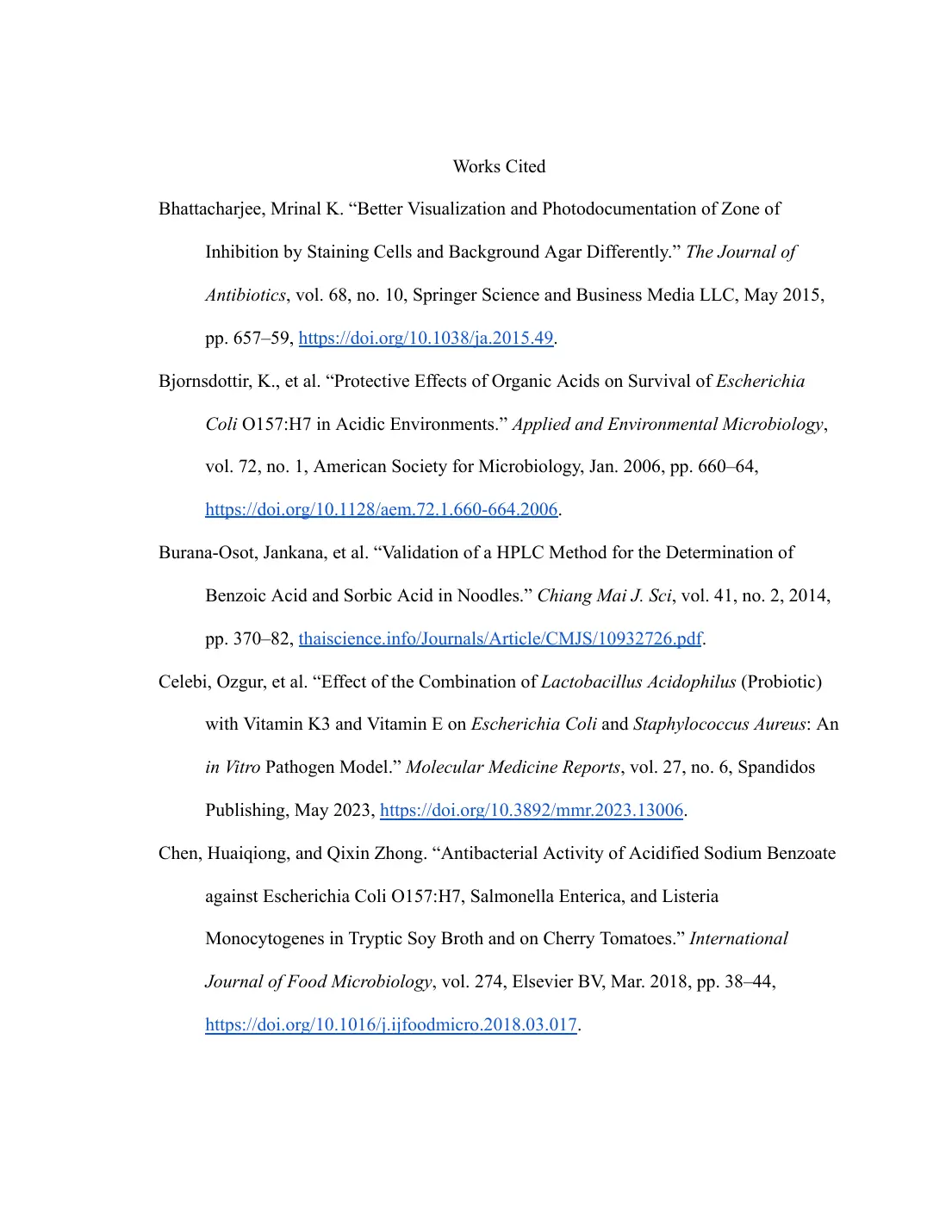
Page 22 of 25
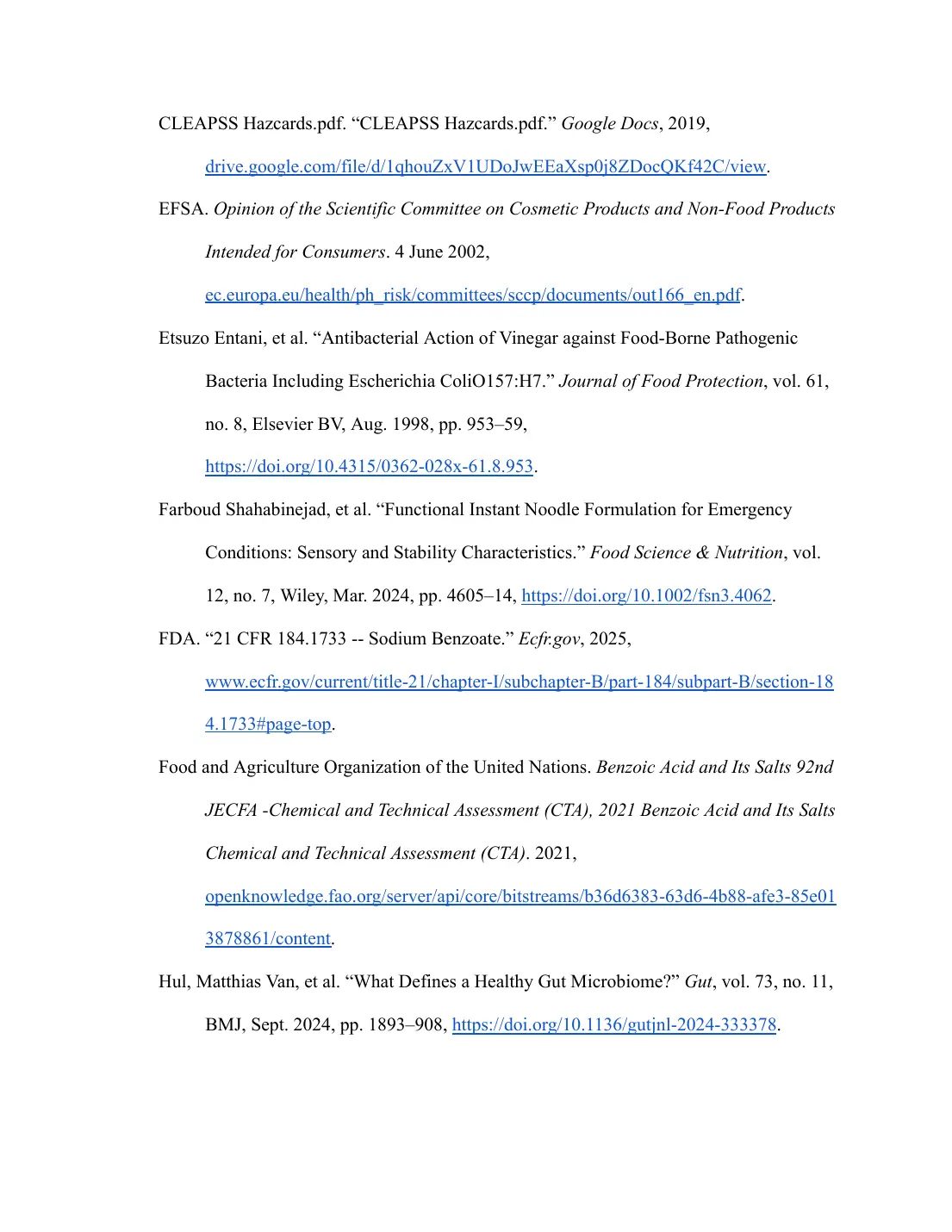
Page 23 of 25
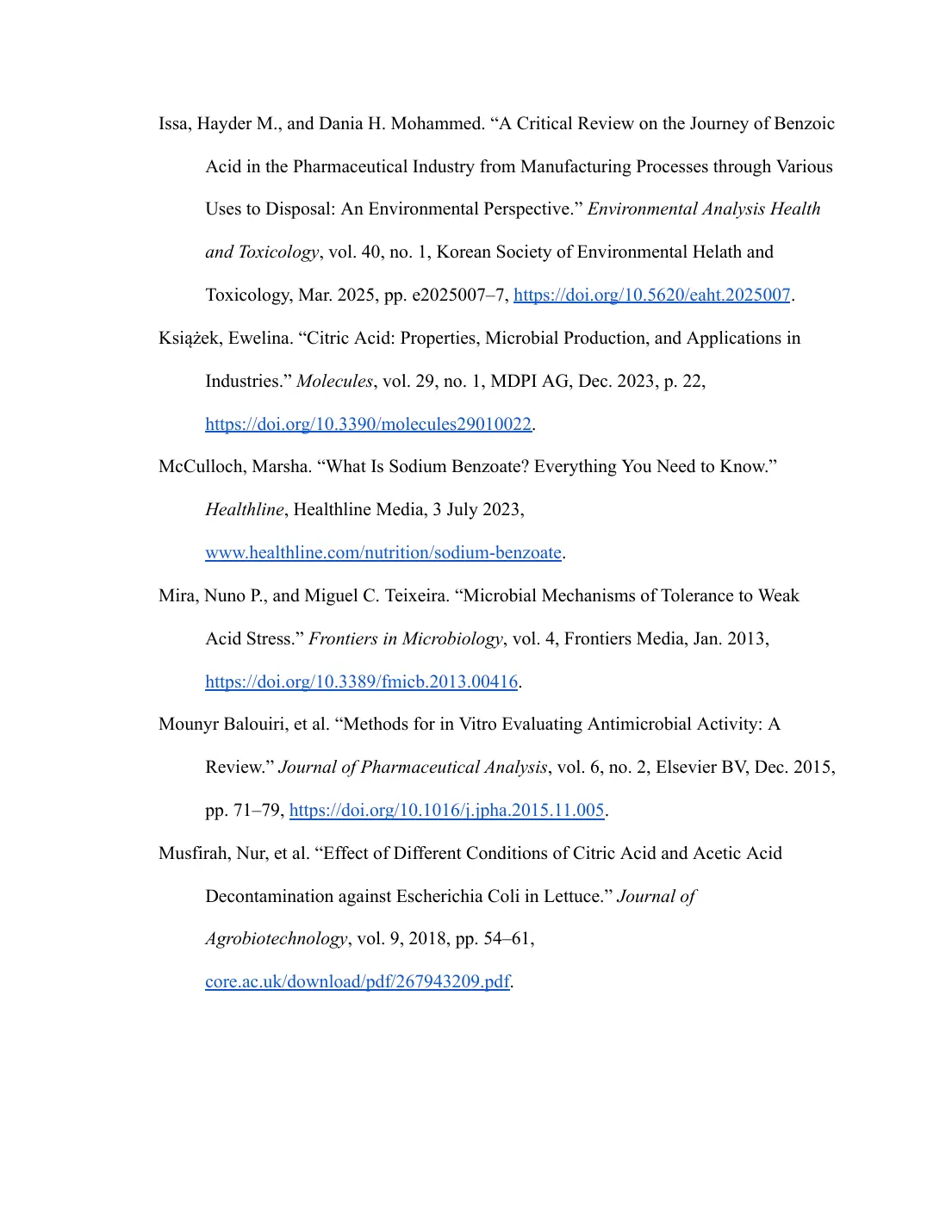
Page 24 of 25
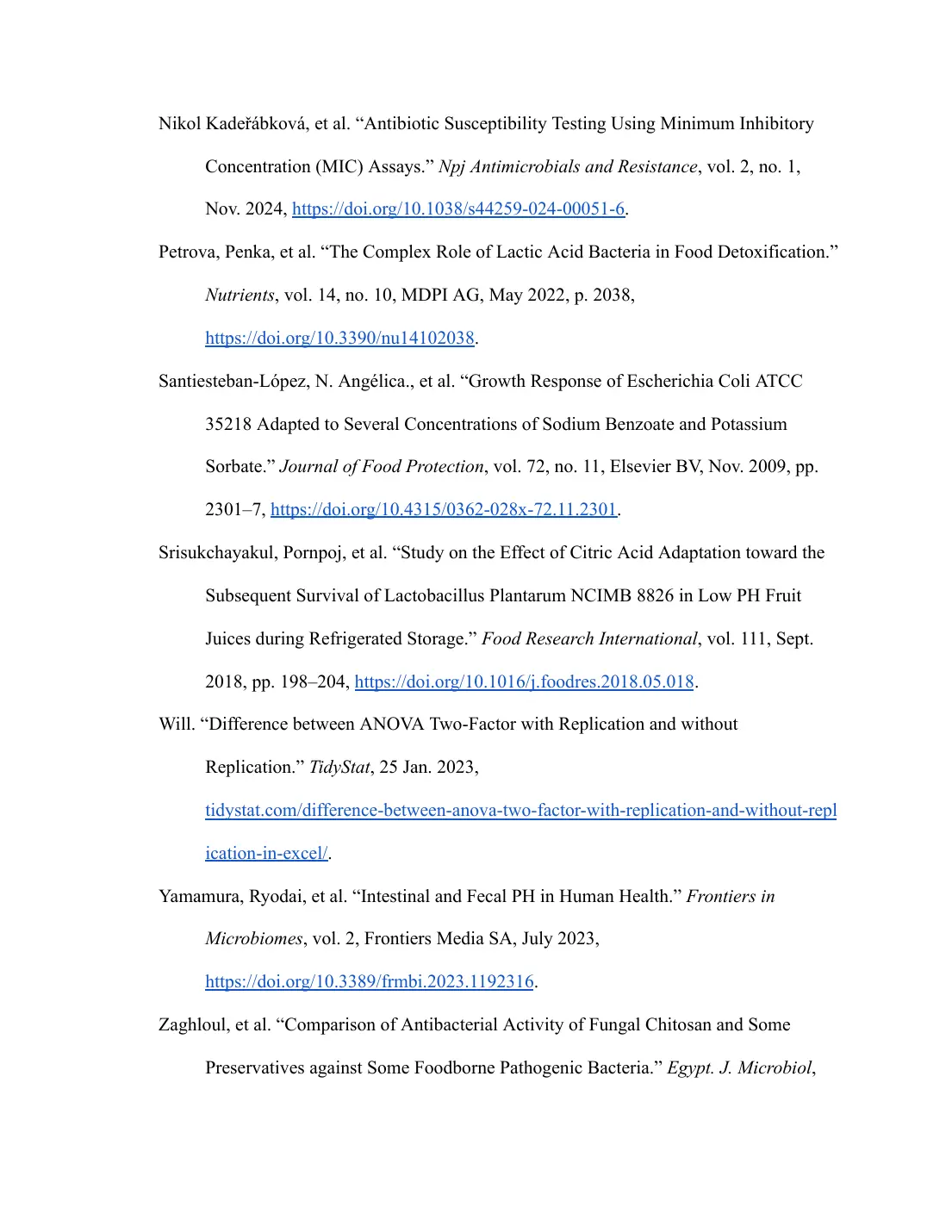
Page 25 of 25

Moderate one of yours
Your marks checked blind, the criterion comments written, and the script annotated like this one. Your first moderation is free.
Try it on a script →